What Is the Standard Width for an Over-the-Range Microwave?
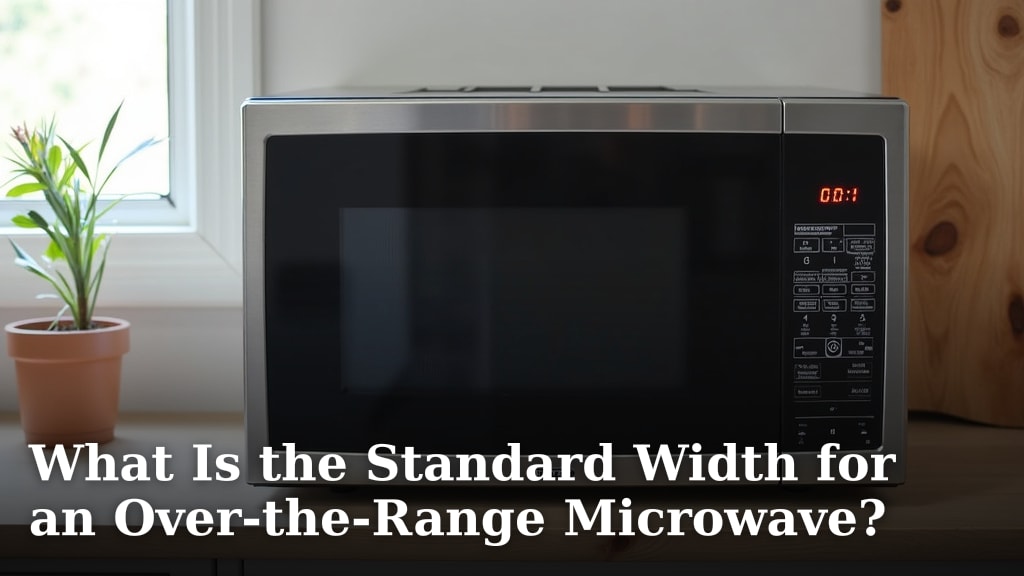
The standard width for an over-the-range microwave is almost always 30 inches. This size is designed to fit neatly above most standard-sized ranges and cooktops. You’ll find this common dimension across many brands and models, making it a reliable choice for many kitchens.
While 30 inches is the standard, it’s important to measure your space carefully. Some compact kitchens might use smaller, 24-inch models. Conversely, some custom or professional kitchens could feature wider, 36-inch units. Knowing your exact cabinet opening is key before you buy.
- The most common width is 30 inches.
- This fits standard kitchen cabinets and ranges.
- Always measure your cabinet opening first.
- Compact models are often 24 inches wide.
Let’s dive into what makes the 30-inch width so popular and what you need to consider for your own kitchen setup.
Understanding Over-the-Range Microwave Dimensions
You’re probably wondering why 30 inches is such a common size for over-the-range (OTR) microwaves. It really comes down to fitting into standard kitchen layouts. Most kitchens are built with cabinets and appliances that follow certain measurements. The 30-inch width just happens to be the sweet spot for these common designs. It allows the microwave to sit flush with the sides of standard cabinets. This creates a clean, built-in look. It also means you don’t have awkward gaps on either side.
The Rise of the Standard Kitchen Cabinet
Back in the day, kitchens were designed a bit differently. As home building standardized, so did cabinet sizes. We started seeing very common widths for base cabinets and wall cabinets. The 30-inch measurement became a key dimension. It’s wide enough to offer a decent amount of cooking space inside the microwave. Yet, it’s not so wide that it overwhelms smaller kitchens. This has led to a widespread adoption by appliance manufacturers.
Why 30 Inches Works So Well
Think of it like fitting puzzle pieces. Kitchen cabinets are like the puzzle frame. The appliances are the pieces that need to fit inside. A 30-inch wide microwave usually fits perfectly between two standard 15-inch wide wall cabinets. Or, it sits neatly above a 30-inch range. This symmetry is pleasing to the eye. It also makes installation much simpler. Installers don’t have to deal with custom modifications as often. It’s a win-win for both the homeowner and the installer.
What About Other Widths?
While 30 inches is king, you’ll encounter other sizes. These are usually for specific situations. For example, some very compact kitchens or apartments might use a 24-inch microwave. These are smaller all around, both in width and interior capacity. You might also find 36-inch microwaves. These are less common for standard residential kitchens. They are more likely to be found in larger homes or professional-style kitchens where cooking space is at a premium.
The Compact Kitchen Solution (24-Inch Models)
If your kitchen feels a bit snug, a 24-inch OTR microwave might be your hero. These units are designed for tight spaces. They offer the convenience of an over-the-range microwave but with a smaller footprint. Keep in mind that their interior space is also reduced. This means you might not be able to fit as large a dish inside. You’ll want to check the cubic feet capacity when looking at these smaller models. Many of these are found in apartment-sized ranges or smaller kitchenettes.
The Larger Kitchen Option (36-Inch Models)
On the flip side, if you have a spacious kitchen and do a lot of cooking, a 36-inch model might be an option. These are often called “professional-style” or “commercial-style” microwaves. They offer a much larger interior. This is great for cooking bigger meals or multiple items at once. However, they require wider cabinet openings and are typically more expensive. You’ll also need to ensure your range or cooktop is also 36 inches wide for a balanced look.
Factors Beyond Just Width: What Else to Measure?
So, you know 30 inches is the standard. But just grabbing any 30-inch microwave might lead to problems. There are other dimensions to consider. You need to measure the height and depth of your cabinet opening. You also need to think about clearance for the door. Microwave doors swing open. You need enough space for them to open fully without hitting anything. This is especially important in tighter spaces.
Cabinet Opening Height and Depth
Most OTR microwaves are designed to fit a standard cabinet height. This is usually around 16.5 to 17 inches from the cooktop surface to the bottom of the cabinet. The depth of the microwave is also important. You don’t want it sticking out too far from your cabinets. A typical depth is around 15 to 16 inches. However, always check the manufacturer’s specifications. They will list the required cabinet dimensions. They will also specify any necessary clearances.
Door Swing Clearance
This is a big one that people often forget. The microwave door needs room to swing open. Most OTR microwaves have doors that swing down. Some have doors that swing to the side. You need to measure how much space you have for the door to open completely. If the door hits a wall or a cabinet end, it can be a problem. You might not be able to open it all the way. Or, it could damage the door or the surrounding cabinets. Always check the product specifications for the required clearance. This is often listed as “door clearance” or “opening radius.”
Ventilation Requirements
Over-the-range microwaves come with ventilation systems. These systems help remove smoke, steam, and odors from your kitchen. There are different types of ventilation. Some vent upwards through the top of the microwave. Others vent out the back of the microwave, through your kitchen wall. Some recirculate air back into the kitchen through filters. You need to know what kind of ventilation your kitchen is set up for. This will influence the type of OTR microwave you can choose. Make sure the vent opening on the microwave aligns with your existing ductwork or your plan for ventilation.
A Quick Checklist Before You Buy
Before you click “add to cart” or head to the store, take a moment to check these things. It will save you a lot of hassle later.
- Measure your cabinet opening width.
- Measure the height from the cooktop to the bottom of the cabinet.
- Measure the depth of your cabinet.
- Check how much space is available for the door to swing open.
- Determine your kitchen’s ventilation setup (ducted or recirculating).
- Note the width of your existing range or cooktop if it’s a 30-inch unit.
The Importance of Accurate Measurements
Taking accurate measurements is like laying a good foundation for your house. If the foundation is off, the whole structure can be unstable. For OTR microwaves, the foundation is your cabinet opening. Even an inch can make a difference. If a microwave is too wide, it won’t fit. If it’s too narrow, it might look awkward or have gaps that collect dust. If it’s too deep, it might stick out too far and look unbalanced. Always measure twice and buy once.
What if My Cabinets Aren’t Standard?
Sometimes, kitchens are custom-built. This means cabinet sizes might not be standard. If you have very wide or very narrow cabinets, you’ll need to look for microwaves that fit those specific dimensions. This might involve searching for less common sizes, like 33-inch models, or considering a different type of installation, like a microwave drawer or a countertop microwave.
Consulting the Manual or a Professional
If you’re unsure about your measurements or your kitchen’s setup, don’t hesitate to check your home’s original plans or consult with a contractor or kitchen designer. They can help you determine the exact dimensions needed for a specific OTR microwave model. You can also find detailed measurement guides on many appliance manufacturer websites. These often provide diagrams to help you understand what to measure.
Comparing OTR Microwave Widths at a Glance
To help you visualize, here’s a quick comparison of common OTR microwave widths. This table focuses on the most typical sizes you’ll find.
| Width Size | Typical Use Case | Notes |
|---|---|---|
| 24 Inches | Compact kitchens, apartments, smaller cooktops | Smaller interior space, fits in tighter spots. |
| 30 Inches | Standard kitchens, most common size | Fits most standard cabinets and ranges. Widest selection. |
| 36 Inches | Large kitchens, professional-style setups | Larger interior space, often for matching larger ranges. Less common. |
Remember, even within these standard widths, there can be slight variations in the overall exterior dimensions. Always check the specific product specifications for the exact measurements before making a purchase. This ensures a proper fit and a harmonious look in your kitchen.
Conclusion
You’ve learned that the 30-inch width is the standard for over-the-range microwaves, designed for seamless integration into most kitchens. While this size offers the most options, remember that compact 24-inch models and larger 36-inch units exist for specific needs. Crucially, always measure your cabinet opening, including height, depth, and door swing clearance, and consider your kitchen’s ventilation setup. Taking these accurate measurements upfront will prevent fit issues and ensure your new microwave looks and works perfectly. Your next step is to grab your tape measure and confirm your kitchen’s exact needs before shopping.
Frequently Asked Questions
Will a 30-inch microwave fit if my cabinet opening is slightly less than 30 inches?
Generally, a 30-inch microwave is designed to fit into a 30-inch cabinet opening. If your opening is less than 30 inches, even by a small amount, a standard 30-inch model likely won’t fit properly. You might need to look for a slightly smaller model or consider custom cabinet adjustments.
Can I replace a 36-inch over-the-range microwave with a 30-inch one?
Replacing a 36-inch microwave with a 30-inch one is possible, but you’ll likely have gaps on the sides of the cabinet opening. You might need to add filler panels or consider custom cabinet work to fill the space and create a clean, finished look. Ensure the height and depth of the new microwave still match your existing setup.
Do I need to worry about the depth of an over-the-range microwave?
Yes, depth is important. Most over-the-range microwaves have a standard depth of about 15-16 inches. You want to make sure the microwave doesn’t stick out too far past your cabinets, as this can look awkward and obstruct the cooking surface below. Always check the product’s depth against your cabinet depth.
What if my range is not 30 inches wide?
If your range or cooktop is a different width, such as 24 inches or 36 inches, you’ll want to choose an over-the-range microwave that matches. This ensures a balanced and visually appealing installation. A 30-inch microwave is designed to pair with a standard 30-inch range.
How do I measure for door swing clearance on an over-the-range microwave?
When the microwave door opens downward, you need to ensure there’s enough clearance in front of the unit so the door can open fully without hitting your range or backsplash. Measure the space from the front of where the microwave will sit to any potential obstructions. Also, note if the door swings to the side, and measure that clearance.