Can a Wider Microwave Fit in a Narrower Cabinet Space?
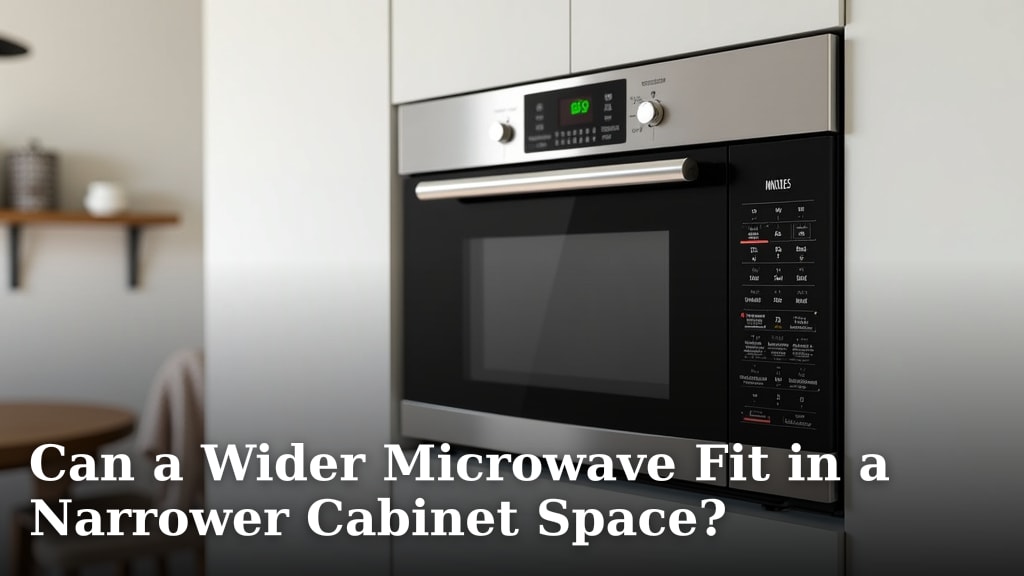
Yes, a wider microwave can fit into a narrower cabinet space, but only if you carefully measure. You’ll need to check both the microwave’s dimensions and your cabinet’s opening. Simply looking at the advertised microwave width isn’t enough; you must compare it to the actual opening you have.
It’s common to get excited about a new appliance and overlook the fine print. Many shoppers assume a microwave labeled as, say, 24 inches wide will fit into any 24-inch cabinet. However, the true width of the microwave unit itself, including any side clearances needed, is what matters. You also need to consider how much clearance the cabinet door or surrounding cabinets require.
- Microwaves can fit in narrower cabinets if measured correctly.
- Always measure the actual cabinet opening.
- Compare this to the full dimensions of the microwave.
- Don’t forget to account for necessary airflow.
- Consider how the microwave door will open.
Below, we’ll walk you through how to measure your cabinet space and your chosen microwave to ensure a perfect fit. We’ll also cover important details like ventilation. Consider a low-profile over-the-range microwave if your cabinet space is limited.
Fitting a Wider Microwave into a Narrower Cabinet: Your Guide
So, you’ve found a microwave that looks fantastic online. It’s got all the features you want. But wait, is it actually going to fit in your cabinet? It’s a common worry when the dimensions don’t seem to match up perfectly. We’ve all been there, staring at a promising appliance and wondering if it’s a lost cause.
The good news is, it’s often possible. You just need to know exactly what to measure and compare. Think of it like trying to fit a new sofa through a tight doorway. You measure the sofa and the doorway, and sometimes, you can even angle it just right.
Understanding Microwave Dimensions: It’s More Than Just Width
When you see a microwave listed as, say, 24 inches wide, that’s usually the overall width of the unit itself. But this doesn’t tell the whole story. You need to consider a few other things before you even think about buying.
Actual Unit Width vs. Advertised Width
Sometimes, the advertised width is the cabinet size it’s designed for. The actual microwave might be a fraction of an inch narrower or wider. Always look for the full product dimensions. These are usually listed in the specifications section of the product page or on the manufacturer’s website. You’ll typically find height, width, and depth listed.
The Importance of Depth and Height
Don’t stop at just the width! You must also check the depth and height. A microwave might be narrow enough, but too deep for your cabinet. It could stick out too far, making it look awkward or even creating a hazard. Similarly, it needs to be short enough to clear the top of the opening.
Measuring Your Cabinet Space Accurately
This is where the real detective work begins. You need to measure your cabinet opening with precision. Don’t guess, and don’t rely on memory. Grab a tape measure and get to it. We’ve found that using a flexible tape measure can sometimes be easier for getting into tight spots.
Measuring the Width of the Opening
Measure the distance from one side of the cabinet opening to the other. Do this at the front and also at the back. Sometimes cabinets taper slightly. You want the narrowest width within the space where the microwave will sit. This is your clear opening width.
Measuring Height and Depth of the Cabinet
Next, measure the height of the opening. Check from the bottom of the cabinet shelf (or the bottom of the opening) to the top of the opening. Then, measure the depth. This is the distance from the front edge of the cabinet to the back wall. Again, measure at the front and back, and note the smallest measurement. You’ll want to ensure the microwave doesn’t stick out beyond the cabinet front too much, if at all.
Considering Obstructions
Are there any pipes, wires, or hinges inside the cabinet that might get in the way? You need to measure the available space around these obstructions. Sometimes, a microwave might seem to fit dimensionally, but a small pipe can make all the difference. You can’t just assume the space is completely clear.
Accounting for Essential Clearances and Airflow
This is a critical step that many people overlook. Microwaves, like all appliances, need breathing room. Without proper airflow, they can overheat, which is not only bad for the appliance but also a potential safety concern. Manufacturers always specify these requirements.
Manufacturer’s Recommended Clearances
Most microwave manufacturers provide guidelines for clearance space. These are usually found in the installation manual. They’ll specify how much space is needed on the sides, top, and back. We found that these clearances are essential for the microwave to function properly and safely (National Electrical Manufacturers Association).
Typically, you’ll need at least 1 to 3 inches of space around the sides and top, and a few inches at the back. This allows heat to escape. If your cabinet is just barely wide enough for the microwave unit, adding these clearance requirements can make it too tight.
Why Airflow is Non-Negotiable
Think of your microwave like a tiny oven. It generates heat when it operates. If that heat can’t escape, it builds up. This can cause the internal components to overheat. Over time, this can lead to reduced performance and a shorter lifespan for the appliance. In extreme cases, it could pose a fire risk.
So, even if the microwave’s physical dimensions seem to fit within your cabinet’s opening, you must ensure there’s enough room for air to circulate. This means the microwave shouldn’t be pushed flush against the back or sides of the cabinet.
The Practicalities: Door Swing and Accessibility
Beyond just fitting the box, you need to think about how you’ll actually use the microwave. This means considering the door swing and how you’ll access it.
Will the Microwave Door Open Fully?
Most microwaves have a door that swings open from the side. If your cabinet opening is very narrow, the door might hit the cabinet frame or a wall when you try to open it. Measure the space where the door needs to swing. Ensure there’s enough room for the door to open completely, or at least enough to comfortably put food in and take it out.
Some microwaves have a drop-down door, which is less of an issue for door swing. However, you still need to ensure the microwave isn’t so deep that the door hits your countertop when it’s open.
Accessing the Microwave Controls
You’ll need to be able to reach the control panel easily. If the microwave is pushed too far back in a deep cabinet, it can be awkward to use. Likewise, if it’s too close to the side, you might find yourself reaching awkwardly. Consider how you’ll interact with the appliance daily.
A Quick Checklist for a Successful Fit
Before you click “buy,” run through this quick checklist. It will help you avoid costly mistakes and frustration.
- Measure the actual cabinet opening (width, height, depth) in multiple spots.
- Find the microwave’s exact external dimensions (width, height, depth) from the manufacturer.
- Subtract the required clearance space from your cabinet opening dimensions.
- Compare the microwave’s dimensions to your available space *after* accounting for clearance.
- Check the door swing to ensure it won’t hit anything when opened.
- Confirm the microwave’s depth won’t cause it to stick out too far.
When a Wider Microwave Just Won’t Work
Sometimes, despite your best efforts, a particular microwave simply won’t fit. If the required clearances mean the microwave is wider than your cabinet opening, or if the door swing is impossible, it’s time to look at other options. Don’t force it!
It can be disappointing, but it’s better to find a microwave that truly fits your space. Trying to cram a microwave into a space that’s too small can lead to damage for both the appliance and your cabinetry. Plus, it won’t look good!
Consider looking for a different model that might have slightly different dimensions. Sometimes, a microwave that’s an inch or two narrower can make all the difference. Or, you might need to explore countertop microwave options if built-in spaces are too restrictive.
Conclusion
Fitting a wider microwave into a narrower cabinet is absolutely possible, but only with careful planning. You’ve learned that it’s not just about the advertised width. You must compare the microwave’s full external dimensions against your cabinet’s actual opening, including height and depth. Don’t forget the vital need for proper airflow and clearance space. These details ensure your microwave runs safely and efficiently. Always check the door swing too. Your next step is to grab your tape measure and apply these tips to your specific cabinet space before you shop.
Frequently Asked Questions
Can I just assume a microwave will fit if the cabinet opening is the same width?
No, you cannot assume a fit based on width alone. You must measure the actual cabinet opening’s height and depth. Also, compare these to the microwave’s exact external dimensions. You also need to factor in necessary clearance space for airflow and door swing.
How much clearance space do microwaves typically need?
Manufacturers usually recommend 1 to 3 inches of clearance on the sides and top, with a few inches at the back. This space is essential for allowing heat to escape. If your cabinet opening is only just wide enough for the microwave unit, adding these clearance requirements can make it too tight.
What happens if I don’t leave enough clearance for airflow?
Lack of proper airflow can cause your microwave to overheat. This can lead to reduced performance and a shorter lifespan for the appliance. In severe cases, it could potentially create a fire hazard. Always follow the manufacturer’s recommendations for ventilation.
My cabinet is deep, but the opening is narrow. Will a microwave fit?
Depth is just as important as width and height. A microwave needs to fit within the cabinet’s depth, and the door must be able to open without obstruction. Ensure the microwave’s depth doesn’t cause it to stick out too far past the cabinet face, or impede the door’s swing.
What if the microwave door hits the cabinet when it opens?
If the microwave door swing is blocked by the cabinet frame, you have a problem. You must ensure there’s enough space for the door to open fully. If it can’t open enough to load or unload food easily, the microwave won’t work for that space. Consider a microwave with a drop-down door if side swing is an issue.