What Is a Turntable Microwave? Explained
A turntable microwave is a microwave oven that uses a rotating glass plate to ensure your food cooks evenly. This plate sits on a roller ring and spins as the microwave runs. This is how a turntable microwave cooks your food thoroughly.
You might be wondering if your microwave has one. Most modern microwaves feature this helpful component. It’s designed to combat hot spots and cold spots. This means better results for reheating leftovers or cooking frozen meals.
- A turntable microwave uses a rotating plate.
- This plate moves food for even heating.
- It helps prevent cold spots and burnt edges.
- Most microwaves today include this feature.
- It makes reheating and cooking more consistent.
Let’s walk through exactly how this popular feature works to make your meals better.
Understanding How Your Microwave Heats Food Evenly
You’ve likely used a microwave countless times. But have you ever stopped to think about how it actually cooks your food? For most of us, it just works. We pop something in, press a button, and out comes a hot meal. But that perfect, even heating isn’t always automatic. Microwaves use a special technology to make sure your food gets cooked all the way through, avoiding those frustrating cold spots. This technology is the turntable system.
The simple act of rotating your food is key. This is what separates a microwave that cooks evenly from one that might leave you with a frozen middle and a scorching hot edge. Let’s break down how this magical spinning plate works its wonders.
The Mechanics of Microwave Heating and the Role of the Turntable
Before we dive into the turntable, it’s helpful to understand how microwaves heat food in the first place. Microwaves generate electromagnetic waves, similar to radio waves. These waves are directed into the cooking cavity. When these waves hit your food, they cause water molecules within the food to vibrate very quickly. This vibration creates friction, and friction, as you know, generates heat. That’s how your food gets warm.
The challenge with this is that these waves don’t always distribute evenly. Think of it like shining a flashlight in a room. Some spots will be brighter than others. In a microwave, some areas of your food might be exposed to more microwave energy than others. This can lead to uneven cooking, a common problem that the turntable was designed to solve.
How Microwave Waves Travel
Inside your microwave, a component called a magnetron generates the microwaves. These waves are then channeled into the oven cavity. They bounce off the metal walls, creating a complex pattern. This pattern isn’t uniform. It has areas of high energy and areas of low energy. If your food just sat still, the parts in the high-energy zones would cook much faster than those in the low-energy zones. You’d end up with overcooked edges and undercooked centers.
The Turntable’s Solution: Constant Movement
This is where the turntable comes in as your kitchen superhero. The turntable system is designed to counteract the unevenness of microwave energy distribution. It’s a simple yet brilliant solution. By rotating your food, it ensures that different parts of the food pass through both the high-energy and low-energy zones multiple times. This constant movement helps to average out the heating process.
Imagine you’re trying to get a tan. If you only stood in one spot, some parts of your body would get more sun than others. But if you moved around constantly, you’d get a more even tan. The turntable does something similar for your food, ensuring every bite gets a fair share of the microwave energy.
Components of a Turntable Microwave System
A turntable microwave isn’t just one piece; it’s a combination of parts working together. Understanding these components can help you see why it’s so effective and what to do if something isn’t working quite right.
The Glass Tray
This is the most visible part of the system. It’s usually a piece of tempered glass designed to withstand heat and the vibrations of rotation. You place your food directly on this tray. It’s important to keep this tray clean so that food doesn’t stick and interfere with its smooth rotation. Most are dishwasher safe, which makes cleanup a breeze.
The Roller Ring or Turntable Support
Beneath the glass tray, you’ll find a roller ring. This ring is made up of several small wheels. These wheels allow the glass tray to spin freely and smoothly. The ring itself typically sits on a central coupling or drive shaft that extends from the microwave’s motor.
The Drive Motor
Hidden away at the base of the microwave is a small electric motor. This motor is the powerhouse behind the turntable’s rotation. It engages with the roller ring or a central shaft to turn the glass tray at a consistent speed. The speed is usually quite slow, designed to provide continuous movement rather than rapid spinning.
The Coupling (or Turntable Hub)
This is the part that connects the drive motor to the roller ring and glass tray. It’s often a plastic piece with a shape that fits into a corresponding recess in the bottom of the glass tray. This coupling is what actually makes the tray spin when the motor turns.
These parts work in harmony to ensure your food is constantly moving. This movement is the secret to evenly heated meals. Without any one of these components functioning properly, you might start to notice your food isn’t heating as well.
Why Even Heating Matters So Much
You might be thinking, “Does it really matter if my food is a few degrees cooler in one spot?” The answer is yes, especially when it comes to both taste and safety. Even heating isn’t just about convenience; it’s about getting the best results from your cooking and reheating.
Avoiding Hot Spots and Cold Spots
We’ve touched on this, but it’s worth reiterating. Hot spots mean parts of your food can become overcooked, dry, or even burnt. Cold spots mean your food is undercooked. This is particularly problematic for foods that need to reach a certain temperature throughout, like leftovers or frozen meals. A cold spot could harbor bacteria.
Better Texture and Taste
Even heating directly impacts the texture and taste of your food. When food is heated evenly, it retains its moisture better. This means your pasta won’t be mushy in one part and tough in another. Your pizza will be consistently warm and gooey, not just in the center. The turntable helps maintain the intended quality of your food.
Food Safety Considerations
For certain foods, reaching a safe internal temperature is critical to kill harmful bacteria. Microwaves are often used for reheating leftovers. If these leftovers have cold spots, they might not be safe to eat. Many food safety guidelines recommend ensuring food is heated thoroughly to at least 165°F (74°C) throughout. The turntable is a key tool in achieving this safety goal (FDA).
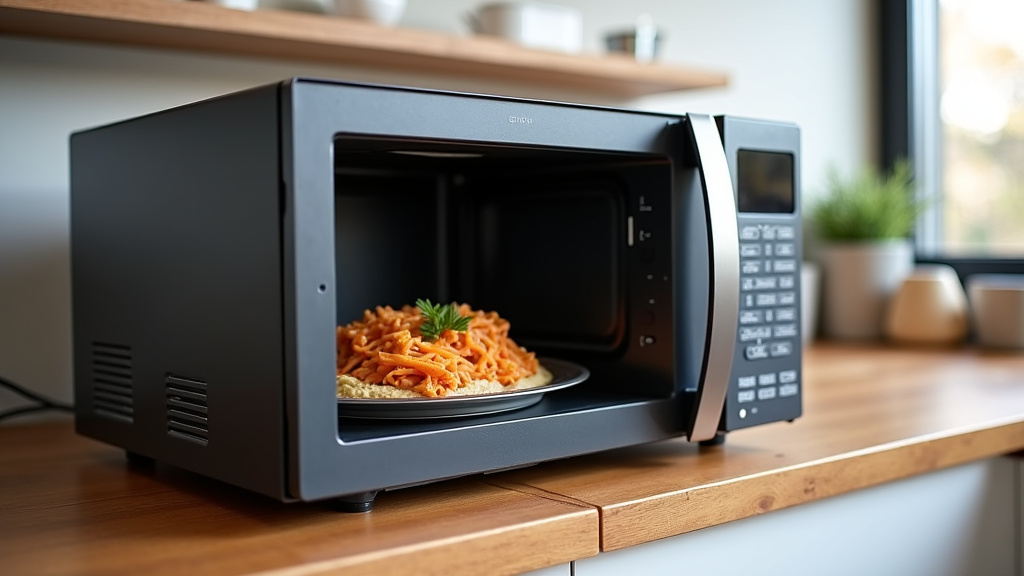
When a Turntable Might Not Be Necessary (or Preferred)
While turntable systems are common and effective, there are situations or microwave designs where they aren’t used or might not be the best fit for everyone.
Countertop Microwaves Without Turntables
Some older or very basic countertop models might not have a turntable. These often rely on a different technology to try and distribute microwaves more evenly, sometimes through a “stirrer” fan or different wave patterns. However, they are less common now due to the proven effectiveness of turntables.
Over-the-Range and Built-in Microwaves
You might have noticed that some over-the-range or built-in microwaves don’t have a visible glass turntable. These often use a different internal system to ensure even heating. Some models might have a flat, ceramic or glass bottom that doesn’t rotate. Instead, they might use a “stirrer” mechanism or advanced wave guides to distribute the energy. Others might have a removable turntable that you can choose to use or not use, depending on your preference and what you’re cooking. You might have noticed that some over-the-range microwaves are a low-profile over-the-range microwave.
Convection Microwaves
Microwaves with convection features often have different heating methods. The convection fan circulates hot air, much like a regular oven. When using the convection function, the turntable might still be present and rotate for even baking or roasting. However, for pure microwave cooking, the turntable’s role is still to ensure the microwave energy is distributed evenly.
Troubleshooting Common Turntable Issues
What happens if your turntable stops spinning? It’s a common problem and often fixable. Here’s what you can look for.
- Check the Glass Tray: Is it seated correctly on the roller ring and coupling? Sometimes, it just gets knocked out of place.
- Inspect the Roller Ring: Make sure the wheels are clean and free of debris. Are any wheels broken or missing?
- Look for Obstructions: Is anything blocking the tray from turning? This could be food debris or an item placed too close to the edge of the tray.
- Listen to the Motor: Do you hear any humming or buzzing when the microwave is supposed to be running? If you hear the motor but the tray isn’t moving, the coupling or roller ring might be the issue. If you hear nothing, the motor itself might have failed.
If you suspect the motor or coupling has failed, it’s often more cost-effective to consider replacing the microwave rather than repairing it, especially for older models. However, sometimes just reseating the tray or cleaning the roller ring can solve the problem.
Quick Checklist for a Well-Functioning Turntable
Here’s a quick way to ensure your turntable system is doing its job:
- Your glass tray sits flat and secure.
- The roller ring is in place beneath the tray.
- The tray spins smoothly when the microwave is running.
- You don’t hear any unusual grinding or clicking noises.
- Food is heating more or less evenly across the plate.
- You can easily remove and clean the glass tray.
Conclusion
You’ve learned how a turntable microwave works to ensure your food heats evenly. This simple rotating plate is a key feature that combats frustrating hot and cold spots. It makes a real difference in how your meals taste and how safe they are to eat. By understanding the roller ring, glass tray, and motor, you can better appreciate this common appliance. If you notice uneven heating, checking these parts is a great first step. Ensuring your turntable is functioning well means more consistent results every time you reheat or cook.
Frequently Asked Questions
Do all microwaves have turntables?
No, not all microwaves include a turntable. While most countertop models do, some over-the-range or built-in microwaves use different methods for even heating. These might include internal “stirrer” fans or specialized wave guides.
Can I remove the turntable from my microwave?
Yes, you can usually remove the glass tray and roller ring for cleaning. Some microwaves, particularly over-the-range models, may have a permanently fixed interior bottom and do not use a removable turntable at all.
Why does my microwave’s turntable stop spinning sometimes?
A common reason is that the glass tray isn’t seated correctly on the roller ring or coupling. Food debris can also block movement. Checking for obstructions and ensuring all parts are clean and properly aligned usually solves the problem.
Is a turntable necessary for cooking safely?
A turntable significantly helps ensure food heats thoroughly, which is important for safety. It reduces the chances of cold spots where bacteria might survive. While not strictly mandatory for all cooking, it’s a key tool for safe reheating of leftovers.
What’s the difference between a microwave with and without a turntable?
Microwaves with turntables rely on the physical rotation of food to move it through different energy zones for even heating. Microwaves without turntables often use other technologies, like internal fans or advanced wave patterns, to distribute microwave energy more uniformly.