How Is a Convection Microwave Different From a Regular One?
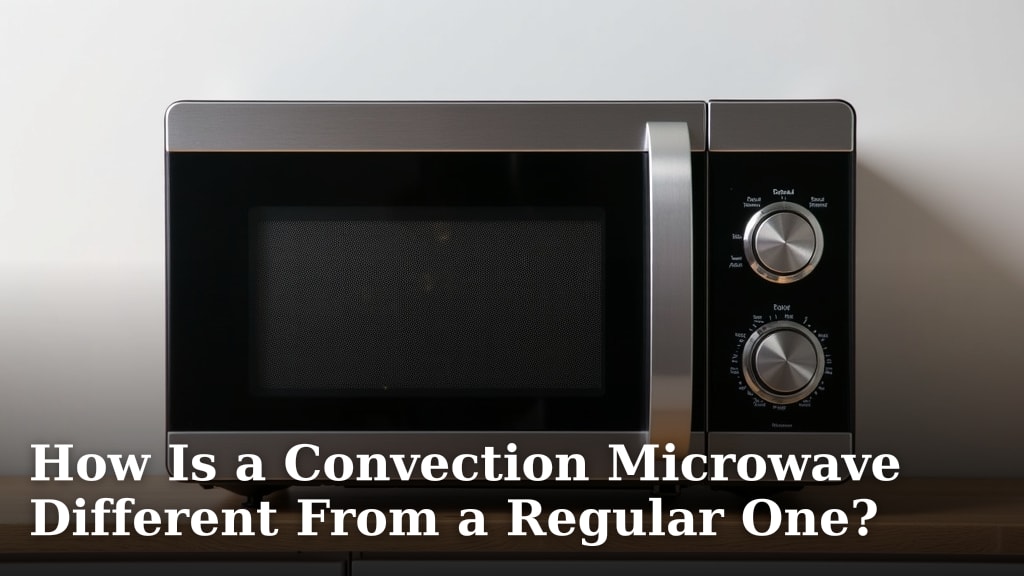
A convection microwave is different from a regular one because it has a fan and heating element that circulate hot air. This allows it to bake, roast, and broil foods, much like a conventional oven. A regular microwave, on the other hand, only uses microwaves to heat food.
We found that while both appliances use microwave energy to cook, the convection feature adds a whole new level of versatility. Think of it as getting two appliances in one: a microwave for quick reheating and a mini oven for more advanced cooking. This can be a real space-saver for many kitchens.
- Convection microwaves add a fan and heating element.
- This lets them bake, roast, and broil like a regular oven.
- Regular microwaves only reheat using microwave energy.
- Convection offers more cooking versatility in one appliance.
Let’s look at how these differences might affect your cooking and which one might be the best fit for your kitchen needs.
Understanding the Convection Microwave vs. Regular Microwave Difference
So, you’re wondering about the difference between a convection microwave and a regular one? It’s a great question. Essentially, a convection microwave adds an oven-like feature to your standard microwave. While both use microwaves to heat your food, the convection model has a few extra tricks up its sleeve.
We’ve found that this added feature can dramatically change what you can cook. Think of it as upgrading from a simple tool to a more versatile kitchen workhorse. Let’s break down what makes them tick.
How a Regular Microwave Works
A regular microwave is pretty straightforward. It uses something called a magnetron to generate microwaves. These waves bounce around inside the oven cavity. They then cause water molecules in your food to vibrate rapidly. This friction creates heat, cooking your food from the inside out. It’s fast and efficient for reheating leftovers or cooking quick meals. You get perfectly warm food in minutes.
Research shows this microwave energy is excellent for simple heating tasks. It’s why so many people rely on them for daily meals. The process is quick, and cleanup is usually a breeze. You can’t beat that for busy weeknights.
How a Convection Microwave Adds Another Dimension
Now, let’s talk about the convection microwave. It has everything a regular microwave does, plus two important additions: a heating element and a fan. The heating element is usually located at the back of the oven. The fan circulates the hot air produced by this element throughout the cooking chamber. This is similar to how a traditional oven works.
This circulating hot air cooks food evenly and browns the outside. You get crispy results that microwaves alone can’t achieve. Many users find this makes a big difference for certain dishes. It’s like having a mini oven inside your microwave.
The Key Components: Fan and Heating Element
The fan is crucial. It ensures that the hot air doesn’t just sit in one spot. It’s constantly moving, like a gentle breeze. This even distribution of heat is what helps prevent hot spots and cold spots in your food. You’ll notice your baked goods come out golden brown all over.
The heating element provides the actual heat. Combined with the fan, it creates a consistent cooking environment. This allows for browning and crisping, which are difficult to achieve with microwave energy alone. Many culinary guides recommend this method for achieving oven-like results.
What Can You Cook with Convection?
Because of the added heating element and fan, a convection microwave can do much more than just reheat. You can bake cakes, cookies, and bread. You can also roast chicken or vegetables, giving them a nice crispy skin. Broiling is another function that becomes possible. This means you can get that lovely charred finish on meats and vegetables.
Think about making a whole roasted chicken or baking a pizza. These are things that are often impossible or turn out soggy in a regular microwave. With convection, your results can be surprisingly close to using a full-sized oven. It’s a real game-changer for smaller kitchens or apartments.
Comparing Cooking Methods and Results
The core difference lies in how heat is applied. A regular microwave uses invisible waves to excite water molecules. This heats food quickly but doesn’t brown or crisp. A convection microwave uses traditional heat from an element, circulated by a fan, much like a conventional oven.
We found that this leads to distinct textural differences. Foods cooked in a convection setting tend to have a crispier exterior and a tender interior. Microwave-only cooking often results in a softer texture. Even reheating a pizza slice can show this difference; convection can bring back some of that original crispiness.
Texture and Browning Differences
Imagine baking cookies. In a regular microwave, they might cook through, but they’ll likely remain pale and soft. In a convection microwave, they’ll get that beautiful golden-brown edge and a slightly chewy center. That’s the power of circulating hot air at work.
For things like roasted potatoes, the difference is even more dramatic. A regular microwave might cook them, but they’ll be soft and steamy. Convection cooking will give them that desired crispy, roasted texture. Many home chefs prefer this for vegetables and meats that benefit from a good sear or crust.
Speed vs. Quality of Cook
Regular microwaves are champions of speed. You can defrost a meal or reheat a coffee in under a minute. Convection cooking, while still faster than a full-sized oven, takes a bit longer because it relies on traditional heating methods. However, the quality of the cook is often superior, especially for items that need browning or crisping.
If your priority is speed above all else, a regular microwave might be sufficient. But if you’re looking for more versatility and better texture for a wider range of dishes, the convection option is worth considering. It’s a trade-off between ultimate speed and enhanced cooking results.
When to Choose Which Appliance
Your choice depends on your cooking habits and kitchen space. If you primarily use your microwave for reheating, popcorn, and very simple cooking tasks, a regular microwave will likely serve you well. They are typically less expensive and simpler to operate.
However, if you enjoy baking, roasting, or want to achieve more oven-like results but have limited kitchen space, a convection microwave is an excellent option. It can often replace a small toaster oven, saving valuable counter space. Many users report that it becomes their go-to appliance for a variety of meals.
Consider Your Cooking Needs
Think about what you cook most often. Do you frequently make casseroles, bake muffins, or roast vegetables? If so, the added capabilities of a convection model will be a big advantage. You might even find yourself using your main oven less often for smaller tasks.
On the other hand, if your culinary adventures are limited to heating up pre-made meals or steaming vegetables, the extra features of a convection unit might go unused. In that case, a standard microwave is a perfectly good choice. We found that understanding your typical meal preparation is key to making the right decision.
Space and Budget Considerations
Convection microwaves tend to be larger and more expensive than their regular counterparts. If you have a small kitchen, the countertop space might be a deciding factor. However, as mentioned, it can sometimes serve as a replacement for other appliances like a toaster oven, potentially saving space overall.
Budget is also important. Regular microwaves are generally more affordable. If you’re on a tight budget, a standard microwave is the more economical choice. We recommend checking prices for both types to see what fits your financial plan best.
A Quick Comparison Table
Here’s a simple table to help you see the main differences at a glance:
| Feature | Regular Microwave | Convection Microwave |
|---|---|---|
| Primary Cooking Method | Microwaves | Microwaves, Hot Air Circulation (Convection) |
| Heating Elements | No | Yes (for convection) |
| Fan | No (or only for cooling) | Yes (for circulating hot air) |
| Browning/Crisping Ability | No | Yes |
| Baking/Roasting Capability | No | Yes |
| Typical Cost | Lower | Higher |
| Best For | Reheating, quick cooking, defrosting | Baking, roasting, crisping, versatile cooking |
Making Your Final Decision: A Checklist
To help you decide which microwave is right for your home, consider these points:
- Do you often reheat leftovers and want it done quickly?
- Are you interested in baking small batches of cookies or muffins?
- Do you want to roast vegetables or a small chicken?
- Is space on your counter a major concern?
- What is your budget for a new appliance?
- How often do you use a traditional oven for smaller tasks?
Conclusion
You now understand the main differences between a convection microwave and a regular one. A regular microwave excels at fast reheating and simple cooking tasks using microwaves. A convection microwave, however, adds a fan and heating element to mimic a conventional oven, allowing you to bake, roast, and broil for crispier results. Your choice depends on your cooking style, kitchen space, and budget. If you’re looking for more versatility and better textures, a convection model might be a great fit. To make your final decision, consider what you cook most often and whether the added features align with your kitchen needs and space.
Frequently Asked Questions
Can a convection microwave fully replace my regular oven?
A convection microwave can handle many baking and roasting tasks, especially for smaller households or for smaller portions. However, for large meals or when you need precise temperature control for delicate pastries, a full-sized conventional oven often still has an advantage. It’s best to think of it as a highly versatile supplement rather than a complete replacement.
Does a convection microwave take longer to cook than a regular microwave?
Yes, when using the convection feature, cooking times are generally longer than with microwave-only functions. This is because it uses traditional heating methods similar to an oven. However, it’s still often faster than a full-sized oven for smaller items and can offer superior texture and browning.
Will a convection microwave brown my food like a regular oven?
Yes, that’s one of the main benefits of the convection feature. The circulating hot air from the heating element and fan works to brown and crisp the exterior of your food. You can achieve results like golden-brown chicken skin or crispy roasted vegetables that a regular microwave cannot provide.
Are convection microwaves more difficult to use?
Most convection microwaves are designed to be user-friendly. You’ll typically have separate settings for microwave cooking and convection cooking, or a combination mode. The controls might seem a bit more complex initially, but they are generally intuitive, and you can always refer to your user manual for specific instructions.
Is a convection microwave worth the extra cost?
If you enjoy baking, roasting, or want crispier results from your microwave, then a convection microwave is often worth the investment. It offers increased versatility and can save counter space by potentially replacing a toaster oven. However, if you only need to reheat food quickly, a regular microwave might be a more budget-friendly choice.