Do Over-the-Range Microwaves Come in Different Depths?
Yes, over-the-range microwaves do come in different depths, but you need to know what to look for. Most standard models are about 15-16 inches deep. This depth is designed to fit neatly over most standard ranges. However, some shallower or deeper options exist.
When you’re looking for a new over-the-range microwave, checking the depth is important. You want it to fit your cabinet space perfectly. A microwave that sticks out too far can be a bumping hazard. It can also look out of place in your kitchen design.
- Most OTR microwaves are 15-16 inches deep.
- Some models are shallower or deeper.
- Depth matters for fit and safety.
- Always measure your cabinet space before buying.
- Consider how much the microwave will stick out.
We’ve found that understanding these depth variations can really help your kitchen remodel go smoothly. Let’s dive into the details of over-the-range microwave depths so you can choose the best fit for your home.
Understanding Over-the-Range Microwave Dimensions
Yes, you’ve come to the right place if you’re wondering about the different depths available for over-the-range (OTR) microwaves. It’s a common question, and the answer is a definite yes! While there’s a standard size most people are familiar with, manufacturers offer variations to fit various kitchen setups and user preferences. Knowing these differences can save you a lot of frustration during installation and make your kitchen feel more cohesive.
Think of it like buying a couch. You know roughly how big it should be for your living room, but then you see some that are a little deeper for extra comfort, or perhaps more streamlined to fit a smaller space. OTR microwaves are similar. They need to fit a specific spot above your stove, and that spot can have slightly different dimensions or requirements.
The Standard OTR Microwave Depth
When people talk about OTR microwaves, they’re usually referring to models with a standard depth. This common size is designed to tuck neatly under your upper kitchen cabinets. We found that most of these standard models measure between 15 and 16 inches deep.
This 15-16 inch range is intentional. It allows the microwave to sit mostly within the footprint of your cabinets. You don’t want it jutting out too far, right? It can become an accidental head-bumper when you’re reaching for spices or even just walking past. Plus, it just looks a bit awkward if it sticks out a lot.
Why Does Depth Matter So Much?
The depth of an OTR microwave isn’t just about looks; it’s a really important practical consideration. It directly impacts how the appliance fits into your kitchen’s existing cabinetry. You have a specific space, usually defined by your upper cabinets, and you need the microwave to work within those boundaries.
Imagine a microwave that’s too deep. It might physically collide with your range’s backsplash or cooktop. Or, it might hang past the front of your cabinets, creating a visual imbalance and, as we mentioned, a potential hazard. On the flip side, a microwave that’s too shallow might leave awkward gaps above or to the sides, which can collect dust and grime.
Fitting with Your Kitchen Cabinets
Most kitchen cabinets are designed with a standard depth themselves, typically around 12 to 13 inches for the base cabinets. The upper cabinets are often built to align with this, meaning the back of the OTR microwave needs to sit flush against the cabinet wall, or at least very close to it. The 15-16 inch depth achieves this for the majority of kitchens.
Manufacturers aim for this depth because it’s what most kitchens are built for. When you measure the space you have, you’re typically measuring from the wall or backsplash to the front edge of your upper cabinets. A 15-16 inch deep microwave will generally fit within this space quite comfortably.
Safety and Clearance Concerns
Safety is a big one. If a microwave sticks out too far, it can interfere with the ventilation of your range. Some ranges have taller backsplashes or controls that are positioned further back. A microwave that protrudes excessively can block essential airflow, impacting the performance of both appliances. This can lead to overheating or reduced efficiency. It’s like putting a blanket over your oven’s exhaust fan – it just doesn’t work as well.
Additionally, there are often building codes or best practice guidelines for appliance installation. These typically recommend a certain amount of clearance for safety and optimal performance. While you might not always see these codes explicitly stated when buying a microwave, they influence the standard dimensions manufacturers use.
Exploring Shallower OTR Microwave Options
So, if 15-16 inches is standard, what if your kitchen has unique cabinet dimensions? Or maybe you prefer a sleeker look? You’ll be happy to know that shallower OTR microwaves do exist. These are often designed for kitchens with shallower upper cabinets or for homeowners who want the microwave to sit more flush with their cabinet fronts.
We’ve found that these shallower models typically measure around 12 to 14 inches deep. They achieve this by being more compact internally. This might mean a slightly smaller turntable or a less powerful fan system, but for many users, the aesthetic benefit and improved fit are well worth it.
When a Shallower Microwave is a Good Choice
A shallower OTR microwave is a fantastic solution for kitchens with custom or shallower cabinets. If your upper cabinets are only 12 inches deep, for instance, a standard 15-inch microwave would stick out a significant 3 inches. That’s quite a bit! A 12 or 13-inch deep OTR microwave would provide a much cleaner, more integrated look.
They are also a great choice if you have a smaller kitchen or a galley kitchen layout. In these spaces, every inch counts. Minimizing protrusions helps maintain clear pathways and can make the kitchen feel more open and less cluttered. Some people simply prefer the streamlined appearance, even if their cabinets could accommodate a standard depth.
Potential Trade-offs of Shallower Models
It’s important to be aware that going shallower might come with a few trade-offs. Because the internal cavity is smaller, you might find that you can’t fit certain larger dishes or cooking vessels. Think casserole dishes, large baking sheets, or even tall pitchers. You might have to switch to smaller plates or bowls for microwaving.
Additionally, some shallower models might have slightly less cooking power or fewer features. Manufacturers have to make design choices to achieve that compact size. So, before you buy, always check the wattage and feature list to ensure it still meets your cooking needs. It’s a balance between form and function.
Deeper OTR Microwave Models: What to Know
While less common, you might also encounter OTR microwaves that are slightly deeper than the standard 15-16 inches. These models are usually designed with specific features in mind, such as more powerful ventilation systems or larger interior capacities. We found these can sometimes extend to 17 or even 18 inches deep.
These deeper units are often found in higher-end or professional-style kitchens. They might have more robust exhaust fans capable of handling the heat and smoke from professional-grade ranges. The extra depth allows for larger, more efficient fan motors and wider vents, which can make a noticeable difference in clearing your kitchen air.
Ventilation Powerhouses
The primary reason for a deeper OTR microwave is often its ventilation capabilities. High-BTU gas ranges or powerful electric cooktops generate a lot of heat, steam, and grease. A standard fan might struggle to keep up. Deeper microwaves often have larger fans, wider ducting options, and better-designed hoods to capture and expel airborne kitchen pollutants more effectively.
If you have a high-performance range, you might find that a deeper OTR microwave with a more powerful CFM (cubic feet per minute) rating is necessary. Check the specifications carefully. A higher CFM rating generally means better ventilation. Many experts suggest that for powerful ranges, you should look for a microwave with a CFM rating of 300 or higher (National Kitchen & Bath Association guidelines often point to this range).
Interior Space and Features
Beyond ventilation, the extra depth can also translate to more interior space. This means you might be able to fit larger microwave-safe containers or even a whole rotisserie chicken if the model has that feature. Some deeper models are designed to accommodate larger turntable sizes, making it easier to reheat or cook family-sized meals.
However, the main consideration with deeper models is whether they will fit your cabinets and your kitchen layout. A 17 or 18-inch deep microwave will stick out considerably past standard upper cabinets. You need to ensure you have enough clearance and that it doesn’t create an obstruction. This is a decision that requires careful measurement and consideration of your kitchen’s flow.
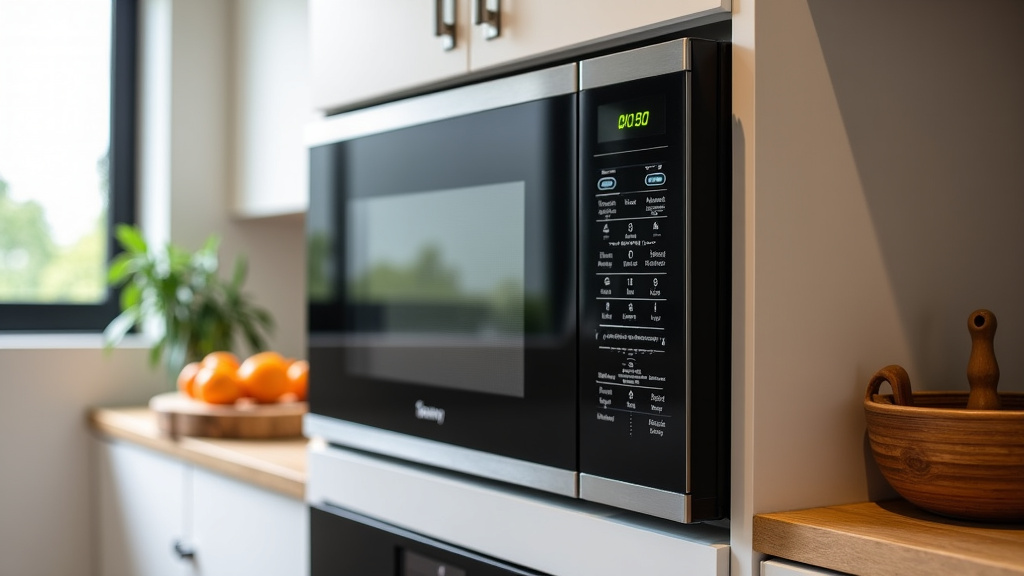
Measuring Your Space: The Golden Rule
Regardless of whether you’re looking at standard, shallow, or deep models, one thing is always true: you must measure your space before you buy. Don’t guess! Grab your tape measure and get precise. This is the single most important step to ensure your new OTR microwave fits perfectly.
What exactly do you need to measure? You need to know the width of the opening, the height of the opening, and, crucially for this discussion, the depth of the opening. Measure from the wall or backsplash to the front edge of your upper cabinets. Also, measure from the cooktop surface up to the underside of the microwave mounting location. This ensures there’s enough headroom for cooking and safe use.
Key Measurements to Take
Here are the critical dimensions you should record:
- Width: Measure the horizontal space available between any side cabinets or walls.
- Height: Measure the vertical space from the cooktop surface (or where the microwave will sit) to the bottom of the upper cabinets.
- Depth: Measure from the backsplash/wall to the front edge of your upper cabinets. This is the most critical measurement for deciding between standard, shallow, or deeper models.
It’s also wise to check the manufacturer’s installation manual for the specific model you are interested in. They will often list the required cutout dimensions and any recommended clearances. This information is usually available on the product page online or can be requested from the retailer.
Double-Checking Clearance and Obstructions
Once you have your measurements, compare them to the specifications of the microwave you’re considering. Pay close attention to the depth specification. Does it fit within your measured cabinet depth? Will it stick out too far? Will it interfere with your range hood or backsplash?
Don’t forget to consider anything that might be in the way. Are there pipes, wires, or decorative elements on your backsplash that could create an obstruction? Sometimes, a cabinet might have a decorative edge or trim that reduces the usable depth. It’s these little details that can make a big difference in the final fit.
A Quick Checklist for Buying Your OTR Microwave
Ready to find the perfect OTR microwave? Keep these points in mind to make sure you get the right fit:
- Measure Your Space Accurately: Width, height, and especially depth.
- Check Cabinet Depth: Compare your measurement to the microwave’s depth specification.
- Consider Your Range: Ensure the microwave doesn’t block ventilation or look disproportionate.
- Review Interior Capacity: Does the depth allow for the dishes you typically use?
- Read Installation Specs: Manufacturers often provide crucial details for a proper fit.
- Think About Aesthetics: How much do you want it to protrude?
Conclusion
You’ve learned that over-the-range (OTR) microwaves definitely come in different depths. While most are designed to fit standard cabinets at 15-16 inches, shallower models (12-14 inches) offer a sleeker look for custom spaces. Deeper options (17-18 inches) often provide enhanced ventilation for powerful ranges. The key takeaway is to always measure your specific kitchen space before you shop.
This simple step prevents installation headaches and ensures your new microwave looks and works great. So grab your tape measure, check those cabinet dimensions, and you’ll be well on your way to finding the perfect OTR microwave for your kitchen.
Frequently Asked Questions
Do I need a special cabinet for a shallow OTR microwave?
Not necessarily. Shallow OTR microwaves are designed for cabinets that are already shallower than the standard 15-16 inches. If your upper cabinets are only 12 or 13 inches deep, a shallow model will fit much more neatly without sticking out.
Will a deeper OTR microwave improve my kitchen’s ventilation?
Often, yes. Deeper OTR microwaves typically house larger fans and wider vents, which can significantly improve their ability to clear smoke, steam, and grease from your kitchen air, especially when paired with a high-powered range.
Can I put any OTR microwave depth into any cabinet?
No, you must measure. While some models offer flexibility, trying to force a microwave that’s too deep into a shallow space can cause it to stick out unsafely or even interfere with your range. Always check the depth against your cabinet measurements.
What happens if my OTR microwave sticks out too far?
If your microwave protrudes too much, it can be a safety hazard, making it easy to bump your head. It can also look disproportionate in your kitchen and potentially block essential airflow for your range’s ventilation system.
Are shallower OTR microwaves less powerful?
Sometimes, shallower models might have slightly less interior space or a less powerful fan to achieve their compact size. However, this isn’t always the case, so you should always check the wattage and feature list to ensure it meets your cooking needs.