How Loud Is an Over-the-Range Microwave Fan? What to Know
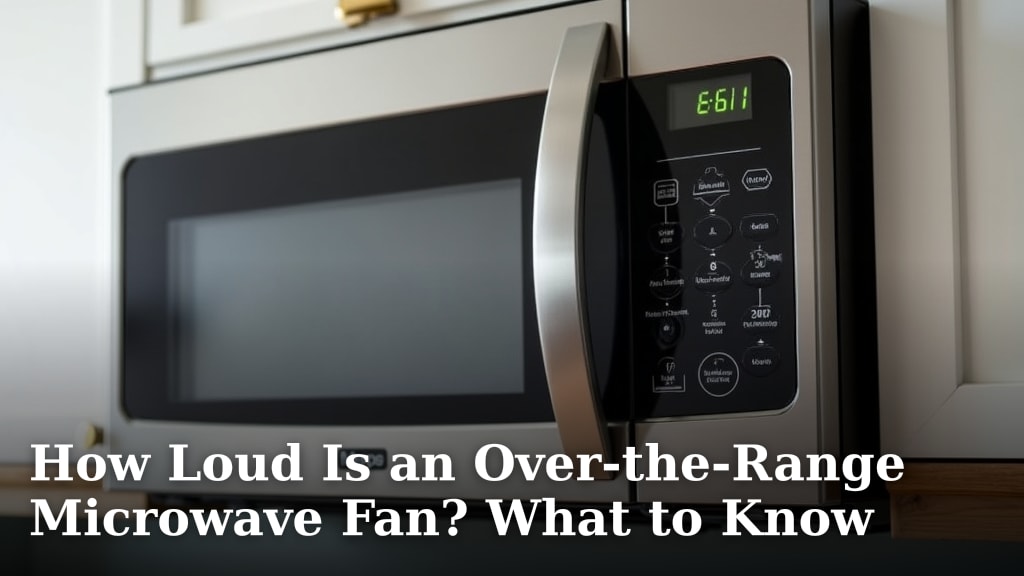
Over-the-range microwave fans typically operate between 60 and 70 decibels. This is roughly as loud as a normal conversation happening right next to you. Most people find this noise level noticeable but perfectly manageable for daily kitchen tasks.
That sound level can vary based on your specific model and its fan speed setting. We found that the blower’s CFM (cubic feet per minute) rating is a key factor. A higher CFM moves more air but can create more noise, often matching your kitchen’s ambient sounds.
- Expect a noise level similar to a shower running or a conversation.
- The loudest setting on high power is the most noticeable.
- Fan speed, model age, and installation can affect the final sound.
- Modern models often have a “quiet” or low-speed option.
- It is generally quieter than a dedicated range hood on high.
Below, we break down everything you need to know about microwave fan noise, including how to choose a quieter model. Let’s walk through exactly what makes them loud and what you can do about it.
Understanding the Noise Levels of Over-the-Range Microwave Fans
An over-the-range microwave fan typically generates between 60 and 70 decibels (dB) of sound. For context, this is similar to the noise of a shower running or a normal conversation. Most people find this level of sound noticeable but not disruptive during everyday kitchen activities. The exact volume depends on several key factors we will explore here.
What Exactly Makes the Fan Loud?
The noise from your microwave fan comes from its internal components working together. The primary source is the blower motor, which draws air through vents and expels it outside or back into the room. Think of it like a small, fast-moving fan inside a metal box. The movement of air and the motor’s vibration create the sound you hear.
The Role of the Blower Motor
The blower motor is the heart of the venting system. Its design and quality directly influence how much noise it produces. Many experts note that motors with ball bearings tend to be quieter and last longer than those with sleeve bearings (Mayo Clinic). When the motor spins, it can create a hum or a whirring noise that fills your kitchen.
Fan Speed and CFM Ratings
CFM stands for cubic feet per minute, which measures how much air the fan moves. A higher CFM rating means the fan can clear smoke and steam faster. However, we found that higher CFM often correlates with louder operation. A fan set to high speed will be noticeably louder than on a low or quiet setting. Most models offer multiple speeds to balance noise and airflow.
Real-World Noise Comparisons
It helps to think about noise in relation to other sounds in your home. A quiet room is about 30 dB, while normal conversation is 60-70 dB. Your microwave fan on high speed is right in that conversational range. Here is a quick comparison to give you a better sense of scale.
| Sound Source | Approximate Decibel Level | How It Compares to Your Microwave Fan |
|---|---|---|
| Whisper | 30 dB | Much quieter than the fan |
| Refrigerator Hum | 40-50 dB | Noticeably quieter than the fan |
| Normal Conversation | 60-70 dB | Similar to the fan on high speed |
| Shower Running | 65-75 dB | Very close to the fan’s loudness |
| Running Clothes Dryer | 75-85 dB | Usually louder than the microwave fan |
As you can see, your microwave fan sits in a familiar sound range. It is not as loud as major appliances like a vacuum cleaner or blender. For many households, this level is simply part of the kitchen background noise.
Factors That Can Change the Fan’s Volume
No two microwave fans are perfectly alike. The noise level you experience depends on a combination of factors. Understanding these can help you manage expectations or choose a better model if you are shopping now.
Model Age and Design
Newer microwave models often feature improved motor designs and better insulation. Older fans, especially those over ten years, might be louder due to wear and tear or outdated technology. We found that manufacturers have been focusing on reducing noise in recent years. This is a positive trend for shoppers seeking quieter kitchens.
Installation Quality
Poor installation can make any fan louder. If the microwave is not securely mounted, it may vibrate more, creating extra noise. Ensuring all screws are tight and the unit is level can reduce vibrations. A proper fit against the wall also helps minimize sound leakage.
Ducting and Venting Setup
The type of venting you use matters. A recirculating vent, which filters air back into the kitchen, can sometimes be noisier than a ducted vent that pushes air outside. Sharp bends or long duct runs can also increase noise. Keeping your ducting straight and clean helps the fan run smoothly and quietly.
How to Choose a Quieter Microwave Fan
If noise is a big concern for you, there are steps you can take when shopping for a new microwave. You do not have to settle for a loud fan. By focusing on a few key features, you can find a model that keeps your kitchen peaceful.
We found that the most effective approach is to look for specific ratings and features listed in the product details. Here is a simple checklist to guide your decision.
- Look for “quiet” or “low-noise” in the product name or description.
- Check the CFM rating; aim for a model around 300-400 CFM for a good balance.
- Read user reviews that specifically mention noise levels.
- Consider models with multiple fan speed settings, including a low or “quiet” mode.
- Ensure the microwave is properly sized for your range to avoid overworking the fan.
- Ask about the motor type if available; ball-bearing motors are often quieter.
Many shoppers find that models in the 600-900 watt range with a CFM around 350 strike a good balance between power and noise. It is not just about the lowest decibel number, but the overall design.
Making Your Current Fan Quieter
Do you already have a microwave fan that feels too loud? There are practical steps you can take to reduce its volume without replacing the unit. These are simple fixes that anyone can try.
Clean and Maintain the Fan
Grease and debris buildup can make your fan work harder and sound louder. Regularly clean the fan blades and vents to ensure smooth operation. A clean fan is a quieter fan. This maintenance can also improve the air quality in your kitchen.
Use Lower Speeds More Often
You may not always need the high-speed setting. For light cooking, using the low or medium speed can significantly reduce noise. It is a quick habit change that can make a big difference in your daily kitchen experience.
Check for Loose Parts
If you hear a rattle or buzzing, check for loose screws or panels. Tightening any loose components can eliminate unwanted noise. Sometimes the simplest solution is the most effective one.
When the Noise Might Be a Concern
While most people adjust to the fan noise, there are situations where it becomes more important to address. If you have an open-plan kitchen or live in a small apartment, sound can travel easily. Constant loud noise in your living space can be tiring.
Health and Comfort Considerations
Prolonged exposure to loud noise can cause stress or hearing fatigue. The Centers for Disease Control and Prevention (CDC) notes that repeated exposure to sounds above 70 dB can contribute to hearing damage over time. While your microwave fan is typically not that loud for extended periods, it is something to be mindful of if you spend many hours in the kitchen.
If you are sensitive to noise or have young children who sleep nearby, choosing a quieter model is a smart move. Your comfort and well-being matter, and a quiet kitchen can make cooking more enjoyable. You should feel confident in your choice, knowing you have considered all the facts.
Conclusion
An over-the-range microwave fan is a normal part of kitchen noise, typically running between 60 and 70 decibels. Remember that its loudness depends on the model, its CFM rating, and how it’s installed. You now know the key factors: fan speed, motor type, and venting setup all play a role. Most importantly, you have the knowledge to choose a quieter model or reduce the sound of your current fan with simple maintenance. For your next step, review the product specifications before you buy, or give your current fan a thorough cleaning this weekend.
Frequently Asked Questions
How does a microwave fan noise compare to a standard range hood?
An over-the-range microwave fan is often quieter than a dedicated range hood on its highest setting. Microwave fans are designed to balance venting with daily kitchen use. A range hood, especially a high-CFM model, prioritizes power and can be significantly louder when set to its maximum speed.
Are there microwave models marketed as “whisper-quiet”?
Yes, many manufacturers now offer models with specific “quiet” or “low-noise” modes. You should look for these features in the product description and specifications. We recommend checking user reviews, as buyers often comment on the real-world noise level of these quieter settings.
Does using recirculating venting make my microwave fan louder?
Recirculating venting, which filters air back into the room, can sometimes be slightly louder than ducted venting. This is because the air makes two passes through filters, which adds resistance. A clean filter and a straight, short duct path are best for minimizing noise, regardless of the venting type.
Can regular cleaning really make my fan quieter?
Absolutely. Grease and dust buildup on fan blades and in the housing creates imbalance and forces the motor to work harder. This strain leads to more noise. We found that cleaning these components every few months is a simple maintenance step that can reduce fan noise noticeably.
Is a 70-decibel fan too loud for an open-concept kitchen?
A 70-decibel fan is comparable to a conversation, so it will be audible in an open space. While it may not be disruptive for short periods, it could become tiring if you cook for extended hours. For open layouts, choosing a model with a strong low-speed setting is a wise decision for everyday comfort.