How to Choose a Microwave for Seniors with Dementia
The best microwave for seniors with dementia has simple controls, clear feedback and a safe supervision plan. Choose the controls around the person's abilities, kitchen layout and the foods they will prepare.
On this page (7 sections)
- What should you check in a microwave for seniors with dementia?
- Which microwave features can reduce confusion?
- Which microwave types suit different supervision needs?
- Which products may fit a caregiver-approved setup?
- How should caregivers set up the microwave?
- What foods and containers need extra care?
- What is the final choice for a microwave for seniors with dementia?
The best microwave for seniors with dementia has simple controls, clear feedback and a supervision plan that matches the user's abilities. Choose the appliance around memory, vision, hearing, hand control, hot food awareness and the meals they will prepare.
Those abilities can change from day to day, so a careful choice today may still need review later. A routine that works in the morning may be harder in the evening.
A microwave is not automatically safe because it has fewer buttons. The person may still need help removing hot containers, understanding steam, setting time or deciding whether food is ready.
Simplicity helps only when the remaining steps are within the person's reach. Lighting, glare, background noise and tiredness can all affect whether a familiar button is found in time.
A caregiver should watch a full meal routine before deciding how much independence is suitable. That test shows more than a quick look at the controls in a shop or online.
Think about the foods served most often, not every food the microwave could cook. A short list of regular meals makes the routine easier to teach and repeat.
Consider who is present at each meal and how long they can stay nearby. A plan that depends on constant supervision may not work for every meal of the day.
For basic instructions, start with our guide on how to work a microwave. Caregivers can use it to create a short routine with the same steps each time.
Keep the written routine in the same place so the person and any helper use identical words. Practice with cool items before hot food is involved.
Check whether the person can stop the cycle if something seems wrong. Also check whether they leave the container in place when steam rises, since opening a covered dish at face level can cause a burn.
A supervision plan should name who removes hot food and who checks that the meal is ready. Review the plan whenever medication, health or daily routine changes.
What should you check in a microwave for seniors with dementia?
Choose a microwave for seniors with dementia by checking control clarity, cooking feedback, door use, safety settings and the level of supervision required. A familiar routine is often more useful than a long list of automatic programs.
Are the controls clear enough?
Look for buttons or touch controls that the user can identify without guessing. One-touch start functions may reduce the number of steps, while a clear display can show the remaining cooking time.
Ask the person to demonstrate the steps they would use for a familiar meal. If they cannot reliably choose the time, start the microwave or stop the cycle, the appliance should be used only with direct caregiver help.
Can the user handle hot food?
Microwave cooking can produce hot dishes, steam and liquids that continue heating after the cycle ends. The user must be able to recognize that the container may be hot and move it safely.
Place heat-safe dishes and oven mitts where they are easy to reach. A caregiver should handle foods that may spill, splatter or release steam when opened.
Is the door easy to use?
A large, easy-to-grip handle can be simpler than a small release button for some users. Check that the user can open and close the door without pulling the microwave forward on the counter.
Counter space also matters. Leave room beside the appliance for setting down a hot container without reaching across the cooking surface.
Which microwave features can reduce confusion?
The most useful features are simple cooking steps, visible time feedback and controls that can be limited or muted. Automatic programs can help with repeated foods, but they still require the user to choose the correct program and handle the food safely.
Sensor cooking may reduce the need to select a precise cooking time. Read our guide to What Does Energy Star Mean on a Microwave? if energy use is part of the household's appliance decision.
A mute function can reduce startling sounds or confusion from repeated beeps. It also removes an audio reminder, so caregivers should decide whether visual checking or direct supervision is more suitable.
A child safety lock may prevent accidental use, but it can also add a step for an authorized user. Test the routine with the caregiver before relying on the lock.
If the person uses a Sharp model, our guide explains how to use a Sharp microwave with a focus on common controls and cooking steps.
Which microwave types suit different supervision needs?
A countertop microwave is usually the simplest type to position, reach and supervise. Place it at a stable height where the user can see the display without using a stool or reaching over a hot surface.
That height should also let the user lift a container straight out without twisting the wrist. A low, steady counter with clear space at the side makes the whole task easier to manage.
An over-the-range microwave may save counter space, but it can be harder to reach and may place hot food above shoulder height. Review [How to Choose an Over-the-Range Microwave?
A Simple Guide](/how-to-choose-an-over-the-range-microwave/) before choosing that layout.
Lifting a hot dish down from a high shelf takes both strength and balance. A person who can press the buttons may still struggle with that final step.
A built-in or tucked away placement can also make supervision harder. The helper needs a clear view of the door, the container and the person's hands during the routine.
Size should be matched to the counter and to the dishes in daily use. A unit that is too deep may sit too close to the edge, while one that is too wide may leave no room for a safe landing spot.
Sensor cooking can help when the user regularly reheats known foods. It does not identify spoiled food, confirm a safe serving temperature or remove the need to check the container.
Sensor features work best with familiar meals in familiar dishes. When the food or dish changes, the result may vary and a caregiver check becomes even more important.
Read How Do Microwaves Work? if a caregiver needs a plain explanation of heating, containers and common safety limits. Microwaves heat from within the food, which helps explain why some parts feel hot before others.
A compact countertop model may suit one person meals and a smaller kitchen. A larger model may suit shared meals or larger plates, but it needs more stable space.
The best layout is the one the user can reach, see and clear away from without help from a stool or a step. Measure the counter and check the door swing before choosing.
Which products may fit a caregiver-approved setup?
These products offer different control and size choices. We checked their listed features and considered how each design may fit a supervised kitchen routine.
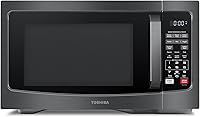
TOSHIBA Countertop Microwave Oven, 1.2 Cu.Ft, 1000W, Black
This TOSHIBA has a 1.2 cu. ft. capacity, 1000W microwave output, a 12.4 in glass turntable and a 20.6 x 14.6 x 11.8 in footprint. Smart Sensor Technology adjusts cooking time and power based on food humidity, while 10 power levels, preset menus, one-touch start and mute control give caregivers several ways to simplify use.
Its black stainless steel exterior and touch controller may suit a kitchen where a larger display and familiar button routine are helpful. The glass turntable, roller ring, manual instruction and microwave oven are included.
The 1000W output can shorten cooking times compared with lower-power models, so caregivers should use the food's instructions and check temperature before serving. Its size also needs enough counter depth and side clearance.
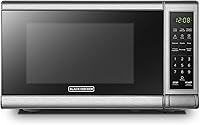
TOSHIBA Countertop Microwave Oven, 1.2 Cu.Ft, 1000W, Stainless Steel
This TOSHIBA has the same 1.2 cu. ft. capacity, 1000W microwave output, 12.4 in glass turntable and 20.6 x 14.6 x 11.8 in dimensions as the other TOSHIBA option. It includes sensor cooking, 10 power levels, preset menus, one-touch cooking, defrost by weight or time and a mute function.
The stainless steel exterior gives this model a different finish from the black TOSHIBA. Its touch controller uses buttons and a keypad, so the caregiver should confirm that the user can identify the needed controls.
The 1000W output calls for care with heating times, especially for small portions. Use a consistent dish and meal routine so the person does not need to make new decisions each time.
COMFEE' Countertop Microwave Oven, 0.7 Cu.Ft, 700W, Black, ECO Mode
This COMFEE' has a compact 0.7 cu. ft. capacity, 700W output and 17.3 x 13 x 10.2 in dimensions. Its one-touch buttons support 1–6 minute cooking and +30 seconds, while mute control, two defrost settings, ECO mode and a 2-step child safety lock may help in a supervised kitchen.
The smaller interior may fit a single plate or mug more easily than larger cookware. It includes the microwave oven and one manual instruction book.
Lower output can mean longer heating times than the 1000W TOSHIBA models. That may be easier to monitor for some routines, but caregivers should still follow food instructions and check the center of the meal before serving.
For another way to compare compact and full-size choices, see our guide to a 1.6 cu. ft. sensor cooking microwave. If large, visible controls are the priority, review best microwaves with large buttons.
How should caregivers set up the microwave?
Set up the microwave where the user can see the display and reach the controls without stretching. Keep the counter clear, place common dishes nearby and avoid storing items above the appliance that could fall into hot food.
Good light on the controls helps more than a brighter display alone. A caregiver should check for glare at different times of day.
The landing space beside the microwave should be empty before cooking starts. That space is for the hot container, so it should not be used for keys, mail or other daily clutter.
Create one written routine with short steps, such as:
- Put the approved container on the turntable.
- Close the door fully.
- Press the agreed cooking button or time.
- Wait for the cycle to end.
- Ask a caregiver to check or remove hot food when needed.
Keep the same approved container for the same meal where possible. A familiar shape and weight make the routine easier to learn and easier for a caregiver to check.
Use large print labels only if they make the controls clearer. Too many added labels can create more confusion, so keep only the steps that match the person's routine.
Labels are most useful when they name one action in plain words. A label that adds extra detail may cause the person to stop and read instead of following the practiced routine.
A caregiver should also check that the microwave is plugged into a suitable outlet, stands level and has space around it. Follow the appliance manual for placement and cleaning instructions.
Ventilation space matters even when the counter looks tidy. The manual will state how much room the unit needs, and blocking vents can affect how the appliance works.
Clean spills promptly and keep the turntable and interior free of buildup. A clean interior makes it easier to see food, notice problems and keep the routine consistent.
Store oven mitts or a pad near the landing space rather than inside a distant drawer. The person should not need to search for protection while holding or waiting beside a hot dish.
Decide who handles cleaning and who checks the setup each week. A shared checklist helps when more than one caregiver supports the same routine.
What foods and containers need extra care?
Use only microwave-safe containers and avoid metal unless the appliance instructions specifically permit it. Remove packaging that is not designed for microwave heating, and vent covered foods according to the food instructions.
Glass and ceramic dishes are often chosen for reheating, but not every dish with those materials is suitable. A caregiver should check the label or manual and avoid dishes with metallic trim or unknown coatings.
Plastic containers need the same care, since some are only for storage and can soften or warp with heat. When in doubt, transfer food to a container that is clearly marked for microwave use.
Lids and covers can trap steam and make a dish harder to open safely. Venting as the food instructions advise lets steam escape in a controlled way before the caregiver lifts the cover.
Liquids can become very hot without appearing to boil. Stir when appropriate, allow standing time and have a caregiver handle mugs or bowls if the user may not recognize the burn risk.
Soups, tea and coffee deserve extra attention because the container can stay hot after the drink cools enough to sip. A handle that feels warm at first may become uncomfortable within moments.
A microwave does not make every food safe to eat. Follow package instructions, refrigerate food promptly and check that reheated food is hot throughout before serving.
Cold spots can remain in the center of a thick meal even when the edges feel hot. Stirring, turning the dish when the routine allows and checking the center give a clearer picture.
Food that has been left out too long should not be reheated as a fix. Follow normal food storage rules and discard food when the timing or smell is uncertain.
If turkey bacon is part of the meal routine, see Can You Microwave Turkey Bacon? for preparation and safety considerations.
Keep a short list of approved foods beside the routine so the choice stays narrow. Approved items should be foods the person already knows, likes and can handle with the agreed level of help.
When a new food is added, test the routine with a caregiver present first. A new shape, cover or heating time can change the risks in ways that are hard to predict.
What is the final choice for a microwave for seniors with dementia?
Choose the COMFEE' when compact size, one-touch buttons, mute control and a child safety lock fit a direct supervision plan. Choose either TOSHIBA when the user benefits from a larger 1.2 cu. ft. interior, sensor cooking, one-touch starts and 1000W output.
That choice should follow a trial of the actual routine, not a preference for a brand or finish. The caregiver should watch whether the person can find the right button, wait for the cycle and leave the container in place.
A compact model may suit a single plate or mug and a smaller counter. Its simpler steps can make a repeated meal routine easier to teach when a caregiver is nearby.
A larger model may suit bigger dishes or shared portions and give more room for sensor programs. That extra space helps only when the unit sits stably and the user can reach inside without stretching.
One-touch starts can reduce the number of decisions during a meal. Sensor cooking can also reduce the need to set a precise time for familiar foods, though the container still needs a safe check.
Mute control should be decided based on the person's response to sound. Some people find beeps reassuring, while others find them startling, so the setting should match the routine rather than a default.
The right microwave for seniors with dementia is the one the caregiver can supervise consistently. If the user cannot safely manage hot food or remember the cooking steps, keep the appliance caregiver-operated even when the controls look simple.
A caregiver-operated setup is not a failure, and it can protect both independence and safety. The person can still choose the meal and take part in the routine while the helper manages the hot steps.
Review the choice after the first few weeks of use. Notes about mistakes, delays or confusion will show whether the model, the routine or the supervision plan needs to change.
Frequently asked questions
What is the best microwave for seniors with dementia?
The best microwave for seniors with dementia is one with controls the user can understand and a supervision plan that matches their needs. A compact model with one-touch buttons may suit simple reheating, while a larger model with sensor cooking can reduce manual time and power choices when a caregiver is nearby.
Are microwaves safe for people with dementia?
Microwaves can be used safely by some people with dementia when the appliance, foods and supervision plan match their abilities. A caregiver should decide whether the person can manage hot containers, cooking times, steam and metal hazards.
Child locks and muted alerts can help, but they don't replace supervision.
What microwave features help seniors with dementia?
Helpful features may include one-touch cooking, clear buttons, simple time entry, sensor cooking, mute controls and a child safety lock. The right mix depends on the person's memory, vision, hearing, hand control and ability to recognize when food is hot.
Should a caregiver choose a small microwave?
A small microwave can be easier to reach and may suit one-person meals, but capacity alone does not determine safety. Check the door, controls, turntable and interior height.
A caregiver should also confirm that the appliance fits securely on the counter and leaves room for safe handling.