Can Metal Containers Go in the Microwave?
Some metal containers can go in the microwave, but only when the manufacturer clearly approves microwave use. Otherwise, move the food to a microwave-safe glass or plastic container before heating.
On this page (9 sections)
- Why are microwave safe metal containers different?
- How can you check if a metal container is microwave approved?
- What should you do if approval is unclear?
- Which food storage containers are safer for reheating?
- Can metal containers go in the microwave with food inside?
- What about metal containers with plastic lids?
- How should you reheat food in a safer container?
- Is it better to store and reheat in separate containers?
- What is the safest choice for microwave use?
Some metal containers can go in the microwave, but only use one when the manufacturer clearly approves that exact container for microwave use. If you cannot confirm approval, transfer the food to microwave-safe glass or plastic before heating.
Metal reflects microwave energy instead of absorbing it like food does. That can create arcing, sparks, uneven heating, or damage to the oven, especially when the container has sharp edges, a narrow rim, metal handles, or a metal lid.
Why are microwave safe metal containers different?
A metal container is not automatically safe because it is stainless steel or labeled food safe. Microwave approval is a separate instruction about how that particular shape, finish, and design behaves during heating.
A smooth, rounded container may behave differently from a tray with sharp corners or a lid with clips. The same caution applies to steel containers, aluminum containers, metal trim, foil seals, and decorative finishes that contain metal.
Food-safe describes contact with food. Microwave-safe describes use during microwave heating.
Check both before placing a container in the oven.
For a wider overview of materials, sizes, lids, and storage needs, see our guide to food storage containers.
How can you check if a metal container is microwave approved?
Look for clear microwave instructions from the container's manufacturer. Check the container, packaging, care guide, or the manufacturer's support information for the exact model.
Use these checks before heating:
- Confirm the exact container model or product name.
- Look for a microwave-safe symbol or written microwave instructions.
- Check whether the approval applies to the container, lid, or both.
- Follow any limits for heating time, power, food type, or empty heating.
- Remove metal clips, foil seals, and unapproved lids.
- Stop immediately if you see sparks, smoke, or hear unusual sounds.
Do not rely on a generic statement that a container is oven-safe, freezer-safe, or dishwasher-safe. Those uses do not prove that the same container is safe in a microwave.
If you want alternatives that are already designed for reheating, compare these best microwave safe containers.
What should you do if approval is unclear?
Use a different container when microwave approval is missing or vague. Move the food to a glass or plastic container that is clearly marked microwave safe.
This is especially useful for leftovers with sauce, soup, or high moisture. Transfer the food before heating rather than testing an unknown metal container in an empty microwave.
Never microwave an empty container unless the manufacturer specifically allows it. Food or liquid helps absorb microwave energy, while an empty container may heat in an unpredictable way.
Are stainless steel microwave safe containers a good choice?
Stainless steel containers are not a general-purpose microwave choice. Some may have specific approval, but stainless steel alone does not mean a container is suitable for microwave heating.
Choose stainless steel for storage or transport only when that matches the manufacturer's instructions. For reheating, glass or approved plastic usually gives you a clearer care routine.
If you prefer plastic for everyday reheating, our guide to best microwave safe plastic containers covers options that are marked for that use.
Which food storage containers are safer for reheating?
Glass and approved plastic are usually easier choices because their microwave instructions are more familiar and easier to verify. You still need to check the lid, leave room for steam, and follow the product's care directions.
The options below are not metal containers. Each one is included because its stated material and microwave guidance make it useful when you want to avoid uncertain metal use.
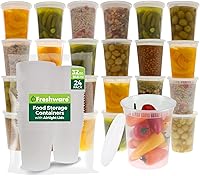
Freshware Food Storage Containers with Lids
Freshware offers 24 round, 32 oz BPA-free polypropylene containers with plastic lids. They are marked microwave safe, freezer safe, and dishwasher safe, with airtight, leak-resistant lids for soups, sauces, snacks, and leftovers.
These containers suit batch cooking and households that want many matching portions. Their round shape and snap lids work well for soups and other foods that need a secure seal during storage, but remove or loosen the lid before heating so steam can escape.
Use the microwave-safe instruction for reheating, not the airtight seal for cooking. After heating, handle the container carefully because the food and container may be hot.
PrepNaturals 5 Pack 30oz Glass Meal Prep
PrepNaturals includes 5 rectangular 30 oz borosilicate glass containers with 1 compartment and 5 airtight snap-lock lids. The glass is marked microwave safe, oven safe, freezer safe, and dishwasher safe, while the care instructions say to hand wash.
This set fits single-compartment meal prep and reheating. Borosilicate glass gives you a non-metal option, but the airtight lid still needs attention during heating because trapped steam can build pressure.
Remove the lid or follow its microwave instructions before heating. Avoid sudden temperature changes unless the care instructions allow them, and hand wash the containers as directed.
Rubbermaid Brilliance BPA-Free Food Storage Containers
Rubbermaid Brilliance includes 2 rectangular 4.7-cup BPA-free plastic containers with 2 lids. They are marked microwave safe, freezer safe, and dishwasher safe, and the lids have built-in vents under the latches for splatter-resistant microwaving with the lid on.
This pair suits larger leftovers, salads, lunches, and meal prep. The rectangular shape uses fridge space efficiently, while the clear construction helps you identify stored food without opening the container.
Open the built-in vents before microwaving so steam can escape. The vented-lid design is more convenient for reheating than a fully sealed lid, but you should still follow the container's instructions and handle hot food carefully.
Can metal containers go in the microwave with food inside?
Only when the manufacturer approves that exact use and gives clear instructions. A container that works for storing food may still be unsuitable for microwave heating.
If approval exists, follow the stated limits closely. Keep the container away from the microwave walls, use the recommended power and time, and watch for sparking during the first use.
Do not combine an approved metal container with unapproved metal utensils, foil, twist ties, or metal-trimmed plates. One unsafe metal item can create the same hazard even when the container itself is approved.
What about metal containers with plastic lids?
The plastic lid does not make a metal container microwave safe. The metal base or sides still reflect microwave energy, and the lid may trap steam unless it has approved vents.
Check each part separately. A lid can be microwave safe while the container is not, or the container can be approved only when used without its lid.
For plastic storage questions, see our guide to microwave safe tupperware containers. If you use resealable containers, our answer about are ziploc containers microwave safe explains why the container and lid instructions both matter.
How should you reheat food in a safer container?
Transfer the food, cover it loosely or use an approved vent, and heat in short intervals. Stir or rotate the food when appropriate so hot and cool spots are reduced.
Leave space at the top for food to expand. Never use a fully sealed lid during heating unless the manufacturer specifically provides a vented microwave method.
Use shallow containers when you need faster, more even reheating. For portion planning, compare best meal prep containers with compartments, and use best freezer food storage containers when freezing is part of your routine.
Let the container stand briefly before opening it. Open the lid away from your face because steam can escape suddenly, even when the container itself is microwave approved.
Is it better to store and reheat in separate containers?
Separate storage and reheating containers make sense when your storage container has no clear microwave approval. Store food in the container that protects it best, then transfer it to approved glass or plastic when you are ready to heat.
This approach also helps when a container has a metal lid, metal trim, or a seal that should not be heated. For freezer meal routines, read how to freeze meal prep containers before choosing a container for both storage and reheating.
What is the safest choice for microwave use?
The safest choice is a container with clear, product-specific microwave approval and a lid that vents or comes off during heating. Do not assume that metal, steel, or stainless steel is safe just because it is durable or food safe.
Choose Freshware if you want many 32 oz plastic portions. Choose PrepNaturals if you prefer 30 oz borosilicate glass containers, or Rubbermaid if you want 4.7-cup plastic containers with built-in lid vents.
When in doubt, avoid the metal container and transfer the food. That simple decision protects the microwave and gives steam a safer way to escape.
Frequently asked questions
Can stainless steel containers go in the microwave?
Only use a stainless steel container in a microwave when its manufacturer clearly approves that exact container for microwave use. Stainless steel reflects microwave energy and can cause arcing, sparks, or uneven heating in many ovens.
If approval is unclear, transfer the food to microwave-safe glass or plastic.
What happens if you microwave a metal container?
A metal container can reflect microwave energy and may cause sparks, arcing, uneven heating, or damage to the oven. The result depends on the container's shape, finish, handles, and the microwave's design.
Stop the oven immediately if you see sparks, smoke, or unusual sounds.
Are metal lids safe in the microwave?
Treat a metal lid as unsafe unless the manufacturer specifically approves it for microwave use. Remove metal clips, foil seals, and metal trim before heating, then cover the food with a microwave-safe lid or vented cover that allows steam to escape.
What containers are safer than metal for reheating?
Microwave-safe glass and approved microwave-safe plastic are simpler choices for reheating. PrepNaturals uses borosilicate glass, while Freshware and Rubbermaid offer plastic containers marked microwave safe.
Follow each container's care instructions and avoid sealing food airtight while it heats.