How to Choose a 24 Inch Countertop Microwave
The best 24 inch countertop microwave is one that fits your measured counter space with room for ventilation and door use. Compare actual width, depth, height, capacity and turntable size before choosing.
On this page (6 sections)
- What should you measure before choosing a 24 inch microwave?
- Which dimensions fit a 24 inch countertop space?
- How much capacity do you need?
- Does wattage matter for a countertop microwave?
- Should you choose a countertop microwave or another appliance?
- How do you pick the right 24 inch countertop microwave?
The best 24 inch countertop microwave is the model that fits your measured counter width, depth and clearance, not simply one advertised near 24 inches. Compare the outside cabinet dimensions first, then check capacity, turntable size, power and door access.
A 24 inch countertop microwave can suit an apartment kitchen, office break room or home counter when the footprint matches the space. Measure the counter before you compare cooking features.
Size labels can be loose, so a model called 24 inch may be a little narrower or a little wider in real life. That small gap can decide whether it slides in neatly or blocks a drawer.
Start with the space you have and work outward from there. Fit comes before presets, because a microwave that crowds its spot will be awkward to use every day.
Think about where food is prepared and where the door opens. You need room to stand, pull the door toward you, and lift dishes out without hitting a cabinet or wall.
Also think about who will use it most. A shared kitchen needs controls that are easy to find, while a solo kitchen can focus more on dish size and power.
When the footprint is right, the other details become much easier to judge. Capacity, controls and care then matter in a way that matches your routine.
What should you measure before choosing a 24 inch microwave?
Measure the available width, depth and height, then reserve space around the cabinet for ventilation and daily use. Do not assume a microwave with a similar name will fit the same opening.
Record these measurements:
- Counter width between walls, cabinets or other appliances
- Counter depth from the wall to the front edge
- Vertical space beneath cabinets or shelves
- Clearance behind and beside the microwave
- Door swing and standing room in front
- The route through doors and hallways
The cabinet must fit without blocking a nearby drawer, cabinet door or cooking area. If the counter is enclosed on both sides, compare the microwave's widest point with the narrowest part of the opening.
Depth matters just as much as width. A microwave can fit across the counter but extend too far toward the front, leaving less room for food preparation or making the door harder to use.
Measure at the counter level, not from a photo or a product name. Tops and trims can vary, so the narrowest point often controls the fit.
Leave space behind the unit for air flow and cord room. A microwave pushed tight to a wall can run hotter and make cleaning harder.
Check height under wall cabinets or a shelf. You still need room to lift the door and remove a hot dish from above.
Check the door path as well. The door may open toward a stool, a pet bowl, or a walkway, and that can change how pleasant daily use feels.
Note the outlet position before you choose. A short cord that forces the unit forward can undo a careful width check.
Measure the delivery route too. Stairs, tight turns and door frames matter if the cabinet is deep or heavy.
Write the numbers down and carry them with you. It is far easier to rule out a model at home than to deal with a return later.
Which dimensions fit a 24 inch countertop space?
The Toshiba and BLACK+DECKER examples are 20.6 in wide, while the Farberware measures 24.4 in wide. That difference matters when your microwave sits between cabinets or near a wall.
| Microwave | Width | Depth | Height | Capacity |
|---|---|---|---|---|
| TOSHIBA Countertop Microwave Oven | 20.6 in | 14.6 in | 11.8 in | 1.2 cu. ft. |
| BLACK+DECKER Microwave Oven Countertop | 20.6 in | 14.8 in | 11.8 in | 1.1 cu. ft. |
| Farberware Countertop Microwave Oven | 24.4 in | 19.6 in | 13.6 in | 2.2 cu. ft. |
These measurements show why the phrase 24 inch countertop microwave needs a real dimension check. The Farberware is the widest and deepest example here, while the Toshiba and BLACK+DECKER leave a smaller footprint.
Width alone does not tell the whole story. Depth decides how much counter remains in front, and height decides whether the unit clears a wall cabinet.
The two smaller cabinets suit a counter where space is tight. They still offer a full turntable and common cooking controls, but they leave more room around them.
The larger cabinet suits a counter with more depth to spare. Its extra interior room comes with a deeper body, so front overhang and door access need a check.
For a broader comparison of larger cabinets, see our guide to the best large countertop microwave. If you are considering a much larger interior, compare the best 2.2 cu ft microwave 1200 watt options separately.
Use the table in the full post as a side by side guide. It makes the trade between footprint and capacity easy to see at a glance.
When you compare models, line up width, depth and height together. A model that wins on one measure can lose on another.
Also compare turntable size with your largest dish. A wide cabinet with a small tray can still feel limiting.
Keep door swing in mind when you read the numbers. A deep cabinet placed near a wall can make the handle hard to reach.
The right pick is the one that leaves breathing room. Fit, clearance and dish size should all agree.
How much capacity do you need?
Choose capacity by the dishes, bowls and containers you use most often. A larger cubic-foot rating can help with wide dishes, but it also usually requires more counter depth and height.
The 1.1 and 1.2 cu. ft. models suit buyers who mainly reheat plates, warm drinks and cook ordinary portions. The 2.2 cu. ft.
Farberware gives more interior volume, but its 24.4 in width and 19.6 in depth need a larger counter.
Measure your largest microwave-safe dish before choosing. Turntable diameter also matters because a cabinet can have useful capacity while a rotating tray limits the dish width.
If interior room is your main concern, our guide to the best large microwave ovens covers larger-capacity choices. For wide plates and serving dishes, compare the best microwaves with large turntables.
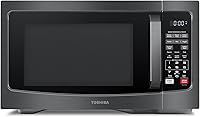
TOSHIBA Countertop Microwave Oven: compact capacity with sensor cooking
The TOSHIBA Countertop Microwave Oven suits a smaller counter where you still want 1.2 cu. ft. capacity, 1000 watts and a 12.4 in glass turntable.
Its 10 power levels let you lower the cooking setting for tasks that need more control. Smart Sensor Technology adjusts cooking time and power based on food humidity, and the unit includes preset menus, defrost by weight or time, and one-touch start.
The black stainless steel microwave has a touch controller and stainless steel inner material. Its height is 11.8 in, so measure the vertical gap under your cabinets before choosing it.
The 12.4 in removable glass turntable gives you a clear dish-size reference. Choose this model if its 20.6 x 14.6 x 11.8 in outside dimensions fit your counter and you want sensor cooking.
Choose a larger cabinet if your dishes need more interior space.
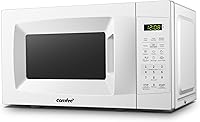
BLACK+DECKER Microwave Oven Countertop: similar footprint with simple controls
The BLACK+DECKER Microwave Oven Countertop fits buyers who want 1.1 cu. ft. capacity and 1000 watts in a cabinet measuring 20.6 in wide, 14.8 in deep and 11.8 in high.
Its 10 power settings support different cooking levels, while preset buttons cover popcorn, potato, pizza, frozen vegetable, beverage and dinner plate. The push-button door and removable glass turntable keep the basic setup straightforward.
The large LED digital display includes a clock and kitchen timer. A child safety lock, interior light and stainless steel inner material add practical features for a shared kitchen.
Choose it when the 20.6 x 14.8 x 11.8 in dimensions work and you prefer a compact 1000-watt model with preset buttons. Compare another model if you need the greater 1.2 or 2.2 cu. ft. capacity shown above.
Farberware Countertop Microwave Oven: the largest interior here
The Farberware Countertop Microwave Oven suits buyers who need 2.2 cu. ft. capacity and have enough counter room for a 24.4 in wide, 19.6 in deep and 13.6 in high cabinet.
Its 10 power levels include multi-stage cooking, and six one-touch options include popcorn, potato and pizza. Defrost can be set by weight or time, while the LED display includes a kitchen timer and clock.
The product title states 1200 watts. Its product details describe 1100 watts of output power, so check the current specifications before making a final power comparison.
The stainless steel exterior includes interior lighting and a child safety lock. Choose it for larger dishes and family-size cooking if the deeper cabinet leaves enough counter and walking space.
Does wattage matter for a countertop microwave?
Wattage affects how quickly a microwave can heat food, but capacity and fit still come first for a countertop model. The Toshiba and BLACK+DECKER are rated at 1000 watts, while the Farberware title states 1200 watts.
Input power and output power are not always the same figure. The Toshiba data lists 1000 watts of microwave output and 1600 watts of input power, so compare like with like when reading specifications.
Power levels also affect daily use. Ten settings on each example let you lower the power for defrosting, gentle reheating or foods that need more time without full heat.
Check the electrical requirements and outlet location before setup. Keep the cord accessible and avoid placing the microwave where it can be splashed by a sink or cooking surface.
Higher wattage can shorten reheating time for dense foods. It can also make small portions heat too fast if you use full power without care.
Lower power settings help with cheese, soup and leftovers that need steady warmth. They give you more control when a dish is already hot.
Defrosting benefits from a gentler setting and a pause. That pace helps frozen food thaw more evenly instead of cooking at the edges.
Preset buttons can save time, but they do not replace a quick check. Food size, starting temperature and dish shape still change the result.
Sensor features can adjust time based on steam from the food. They suit people who want less guesswork with common reheats.
Ventilation space supports steady performance as well. A crowded spot can make the unit work harder and get warm to the touch.
Keep the interior clean so heat moves well. Splatters can smoke and create hot spots during the next use.
Place the microwave on a level, dry surface. A wobble or damp spot can make daily use less safe.
Think about circuit load if the outlet is shared. A microwave draws a lot of power, so a dedicated or lightly loaded outlet is easier on the kitchen.
Wattage matters most after fit and capacity are settled. Choose the power level that matches the foods you cook most often.
Should you choose a countertop microwave or another appliance?
Choose a countertop microwave when you need quick reheating and cooking without a built-in installation. If your main goal is rice preparation, compare rice cooker vs microwave because the better choice depends on the food you make most often.
A countertop model also differs from an over-the-range unit. If you are replacing a hood or planning a cabinet installation, read do over-the-range microwaves come in 24 inch width? and what size microwave fits a 30 inch range?.
If you need ventilation above a range rather than a microwave, compare the best wall mount range hood 30-inch. A countertop microwave does not replace a range hood.
A countertop microwave is flexible because it can move or be replaced. That freedom suits renters and small kitchens where a built-in cutout is not an option.
An over-the-range model saves counter space, but it needs a matching cabinet opening. It also puts the door higher, which can be harder for some users to reach.
A rice cooker does one job very well. It suits rice as a daily staple more than a microwave does.
A microwave covers more ground for reheating and quick cooking. It suits leftovers, drinks, vegetables and frozen foods in one spot.
A range hood handles smoke and grease from a cooktop. A microwave cannot do that job, even if it sits nearby.
Think about the work you do most often. Daily rice may favor a rice cooker, while varied reheating favors a microwave.
Think about installation next. Countertop units need counter room, while built-in units need cabinet work and hood planning.
Cost of setup also differs. A countertop unit needs a surface and an outlet, while other options may need more changes.
Care needs differ too. A countertop microwave needs space around it for air, while a hood needs filter cleaning.
Small kitchens benefit from picking one appliance that covers many tasks. A countertop microwave often fills that role well.
Larger kitchens can afford separate tools for separate jobs. That split can make each appliance easier to use.
Choose based on food habits first. The appliance you use daily will earn its space.
How do you pick the right 24 inch countertop microwave?
Start with the actual counter measurements, including ventilation space and door clearance. Then choose capacity based on your largest dish, not just the outside width.
Pick the Toshiba if a 20.6 x 14.6 x 11.8 in cabinet, 1.2 cu. ft. capacity and sensor cooking fit your routine. Pick the BLACK+DECKER if you want a similar 20.6 in width with 1.1 cu. ft. capacity, preset buttons and a child safety lock.
Pick the Farberware if you need 2.2 cu. ft. capacity and can fit its larger 24.4 x 19.6 x 13.6 in cabinet. The best 24 inch countertop microwave is the one that fits your space and the dishes you use every day.
Measure your largest plate, bowl and casserole dish before you decide. Turntable size matters as much as the cubic foot number.
If your dishes are standard plates, a compact cabinet may be enough. It will leave more counter for prep and daily tasks.
If you use wide serving dishes, the larger interior may be worth the deeper footprint. Check that the front of the counter still feels open.
Consider door access in the final choice. The handle should be easy to reach without leaning over food prep areas.
Consider controls for the household. Simple presets suit guests and younger users, while sensor options suit people who reheat often.
Think about cleaning as well. A removable turntable and a smooth interior make routine care faster.
Plan the outlet and cord path before setup. A tidy cord route keeps the counter safer and easier to wipe.
Leave the required clearance around the cabinet. Good air flow supports steady use and longer life.
Match power to your habits after fit is clear. Common reheating works well at 1000 watts, while larger loads may favor more power.
Read the manual for defrost and care steps. Weight based defrost and gentle power settings help with frozen foods.
Choose the model that leaves room to cook and room to live. That balance is the goal.
Frequently asked questions
What is the best 24 inch countertop microwave?
The best 24 inch countertop microwave is the one that fits your measured counter width, depth and height while leaving the required ventilation space. Among these examples, the Farberware offers the largest 2.2 cu. ft. capacity, while the Toshiba and BLACK+DECKER use smaller cabinets with 1.2 and 1.1 cu. ft. capacities.
Is a 24 inch microwave really 24 inches wide?
Not always. A microwave described as 24 inch may have an outside width below or above 24 inches, so measure the actual cabinet width.
The examples here range from 20.6 in wide for the Toshiba and BLACK+DECKER to 24.4 in for the Farberware.
How much counter depth does a countertop microwave need?
Counter depth depends on the microwave's actual cabinet depth plus the clearance required for ventilation and safe operation. These examples measure 14.6, 14.8 and 19.6 in deep, so check the full installation instructions instead of measuring only the open counter.
Is 1000 watts enough for a countertop microwave?
A 1000-watt countertop microwave can handle common reheating, defrosting and cooking tasks when you use the right time and power setting. The Toshiba and BLACK+DECKER are rated at 1000 watts, while the Farberware title states 1200 watts and its product details describe 1100 watts of output power.