Convection Microwave vs Air Fryer: Which Should You Choose? (October 2026)
Choose a convection microwave for reheating and cooking in one appliance, or an air fryer for crisping foods in a dedicated basket. The right pick depends on what you cook most and the counter space you can give it.
On this page (7 sections)
- Convection microwave vs air fryer: what is the main difference?
- Which appliance is better for everyday meals?
- Which appliance gives food the texture you want?
- How much space do you have?
- Which is easier to clean and maintain?
- Should you choose one appliance or keep both?
- Which should you choose: convection microwave or air fryer?
Choose a convection microwave for microwave reheating plus convection cooking, or an air fryer for focused basket cooking and crisping. In a convection microwave vs air fryer comparison, the better fit depends on your everyday meals, cooking space and whether you need microwave functions.
A convection microwave combines microwave energy with hot-air cooking. An air fryer uses circulating hot air, usually in a basket, to cook and brown food.
See basket air fryer vs air fryer oven to compare those formats.
The products below illustrate the difference: the countertop microwaves are for microwave tasks, while the Ninja and Cosori are dedicated air fryers. They are examples of each appliance type, not like-for-like convection microwave and air-fryer models.
 Best for compact microwave basics
Chefman Countertop Microwave Oven 0.7 Cu. Ft.
Convection microwave vs air fryer: what is the main difference?
A convection microwave can reheat and defrost with microwaves, then use convection heat for browning; an air fryer focuses on hot-air cooking. Check the specific model's listed modes because not every microwave has convection or air frying.
Microwave energy is useful for warming food quickly and defrosting. Convection cooking uses heated air to cook and brown food, and a combination oven can offer both methods in one appliance.
An air fryer directs hot air around food in a basket or chamber. Basket size and shape affect what fits, while a microwave's turntable or oven cavity may suit different dishes.
If you're new to the microwave side, our guide to What Is Convection Cooking in a Microwave? explains how the mode works and what to check on a model's controls.
Which appliance is better for everyday meals?
Choose the appliance that matches the jobs you do most: microwave reheating and defrosting favor a microwave, while crisping and basket cooking favor an air fryer. You may prefer both if your meals regularly need both methods.
A convection microwave can save you from moving food between appliances when the model supports the cooking modes you need. It can reheat a leftover portion with microwaves and bake or brown foods using convection.
A dedicated air fryer gives you a cooking basket and a focused set of hot-air functions. The Ninja Foodi has 2 independent 4-quart baskets and 6 programs: air fry, air broil, roast, bake, reheat and dehydrate.
The Cosori TurboBlaze has a 6-quart square basket, 5 fan speeds and temperatures from 90°F to 450°F. Those features provide control over air circulation and heat, but its basket shape still sets the size and shape of each load.
When does a convection microwave make more sense?
A convection microwave makes more sense when you regularly heat leftovers, defrost ingredients and also want convection cooking in one appliance. For a cabinet installation, compare built-in convection microwave options.
Confirm that the model includes convection, since a standard countertop microwave may not.
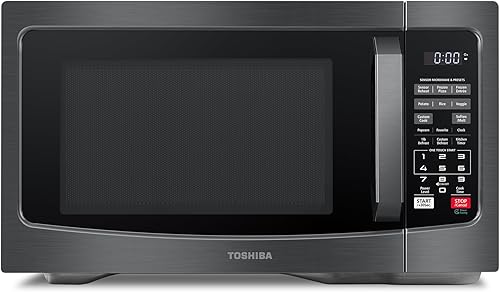
For example, the TOSHIBA Countertop Microwave Oven has a 1.2 cu ft capacity, 1000W microwave output, humidity sensor and 10 power levels. Its listed features cover microwave cooking, not convection or air frying, so it represents the microwave function rather than a convection combo.
The Chefman Countertop Microwave Oven 0.7 Cu. Ft. is a smaller microwave with 700W output, 6 presets and 10 power levels.
It can be a fit for compact microwave basics, but its listed modes don't include convection or air frying.
For a dedicated combination oven, compare features in our guide to the best convection microwave oven combo. If you want a countertop model, see best convection microwave countertop.
When is an air fryer the better fit?
An air fryer is the better fit when you often cook foods that benefit from hot-air circulation and a crisp exterior. A dedicated air fryer gives those jobs a basket and controls built for air frying.
The Ninja's 2 baskets let you cook separate foods in different zones. Its Smart Finish feature is designed to coordinate their finish times, while Match Cook copies settings across both zones.
The Cosori's 5 fan speeds let you adjust airflow, and its basket and crisper plate are dishwasher-safe. Its preheat function can be adjusted or skipped, according to the chosen setting.
If you're still comparing dedicated basket models, our which air fryer to buy guide walks through the features that matter for your cooking habits.
Which appliance gives food the texture you want?
An air fryer is a practical choice when crisping is the priority; a convection microwave can brown food while also handling microwave tasks. Neither appliance guarantees the same texture for every food or portion size.
A dedicated air fryer concentrates hot-air cooking in a smaller space. The Ninja's temperature range is 105°F to 450°F, and the Cosori's is 90°F to 450°F, so both offer a range of settings for different foods.
A convection microwave's larger cooking area may suit foods or dishes that don't fit in a basket. Check the cavity dimensions and included racks or trays for the exact model, since accessories and usable space vary.
For a deeper look at convection modes, read What Is Convection Cooking in a Microwave?. If toaster ovens are also on your shortlist, compare their cooking space and layout in our convection microwave vs toaster oven guide.
How much space do you have?
Choose by the space you can spare for both the appliance and its working area. Measure the counter, storage location and nearby cabinets before deciding.
A microwave often stays on the counter, while a dedicated air fryer may need space for the unit, basket removal and airflow. A combo can reduce the number of appliances, but it may have a larger footprint or heavier door than a basic microwave.
The TOSHIBA measures 20.6 in wide, 14.6 in deep and 11.8 in high. The Chefman is 17.52 in wide, 12.93 in deep and 9.53 in high.
The Ninja measures 15.63 in wide, 13.86 in deep and 12.4 in high. The Cosori measures 11.8 in wide, 14.4 in deep and 11.9 in high, not including extra clearance for access and airflow.
Measure with the appliance door open or basket pulled out, too. If the counter is above a range, start with [How to Choose an Over-the-Range Microwave?
A Simple Guide](/how-to-choose-an-over-the-range-microwave/) to check whether that installation type suits your kitchen.
Which is easier to clean and maintain?
A removable air-fryer basket can simplify cleanup after crisping, while microwave cleanup depends on the cavity, turntable and included parts. Check which components are removable and how the manual says to clean them.
The Ninja's cooking baskets and crisper plates are dishwasher-safe. The Cosori's basket and crisper plate are also dishwasher-safe, which can help after foods leave grease or crumbs.
The TOSHIBA includes a removable glass turntable. The Chefman turntable is top-rack dishwasher-safe, and its exterior can be wiped with a damp towel.
For a combo, consider cleaning the microwave cavity as well as any tray or rack used for convection cooking. A larger cavity can be useful for dishes, but it also means more interior surface to wipe.
Should you choose one appliance or keep both?
Choose one appliance if it covers the cooking tasks you use each week; keep both if you rely on microwave speed and air-fryer crisping. Your regular meals matter more than a long feature list.
A convection microwave may be the more flexible single appliance when the exact model has both microwave and convection modes. It can handle a range of jobs, but a combined appliance isn't automatically as convenient as a dedicated basket for air-fryer meals.
An air fryer can be a good second appliance if you already own a microwave and want a separate way to brown or crisp food. The Ninja's dual baskets are useful for two foods, while the Cosori's single 6-quart basket has 5 fan speeds.
If you want a microwave with a different installation style, see whether a convection microwave drawer is available for your kitchen. For a combo with a specific finish, our guide to a white microwave air fryer combo covers that style of search.
Which should you choose: convection microwave or air fryer?
Pick a convection microwave if you want microwave reheating and defrosting alongside convection cooking; pick an air fryer if your main goal is hot-air cooking in a basket. Choose both when those jobs are equally important and you have room.
For one appliance, verify its exact modes before buying: a countertop microwave may not include convection, and convection doesn't always mean air frying. For a dedicated basket appliance, compare its capacity, controls, basket layout and dimensions with the meals you usually make.
If you want broad cooking flexibility in one microwave, explore the best convection microwave countertop guide. If crisping is the main task, use our which air fryer to buy guide to narrow the basket style and size.
Frequently asked questions
Is a convection microwave the same as an air fryer?
No. A convection microwave combines microwave heating with a convection oven function, while an air fryer is a dedicated appliance that circulates hot air around food in a basket or cooking chamber.
Some microwave combos include an air-fry mode, but check the exact model because features vary.
Can a convection microwave make food crispy?
A convection microwave can brown and crisp food with circulating hot air, especially when the model includes a suitable convection or air-fry mode. Results depend on the appliance, food and settings.
A dedicated air fryer focuses on crisping in a smaller cooking space.
Which is better for frozen food?
A microwave is handy when speed and thawing matter, while an air fryer suits frozen foods you want browned or crisp. A convection microwave can combine microwave and convection cooking on models that support both.
Check the manual for which modes can be used together.
Can you replace a microwave with an air fryer?
An air fryer can reheat some foods, but it doesn't replace microwave functions such as quick liquid heating or microwave defrosting. If you use those tasks often, keep a microwave or choose a microwave combination oven that includes the cooking modes you need.
Should you buy a microwave air fryer combo or separate appliances?
Choose a combo if one appliance that reheats and browns saves useful counter space. Choose separate appliances if you want a dedicated air-fry basket or often cook different foods at once.
Compare the exact modes, capacity and dimensions before deciding.


