How to Freeze Meals in Meal Prep Containers
Freeze meals in freezer-safe containers after cooling them, leaving room for expansion, and sealing them well. Label each portion, freeze it flat or upright as needed, and loosen the lid before microwaving.
On this page (11 sections)
- How do you prepare meals for freezing?
- Which meal prep containers can you freeze?
- How full should you fill meal prep containers?
- How do you pack and label frozen meals?
- What container size works for larger meals?
- How do you freeze family portions?
- How do you thaw frozen meals?
- Can you microwave frozen meal prep containers?
- How do you prevent freezer burn?
- How do portion sizes affect freezing?
- What is the safest way to freeze meal prep containers?
Freeze meals in meal prep containers by cooling the food, choosing freezer-safe containers, leaving room for expansion, and sealing each portion before labeling it. Store containers where they won't be crushed, then thaw and reheat according to the container's care instructions.
The best container depends on the meal, serving size, freezer space, and whether you want to reheat in the same container. This guide explains how to prepare, fill, freeze, thaw, and reheat premade meals without making the process harder than it needs to be.
How do you prepare meals for freezing?
Cool cooked meals safely before sealing them for the freezer. Divide the food into portions soon after cooking, then let steam escape while the food cools in a safe way.
Large, deep portions cool slowly. Shallow portions spread across several containers cool more evenly and make later reheating easier.
Remove bones, excess liquid, or toppings that may change texture if they do not freeze well. Keep sauces with the meal when they freeze and reheat reliably, but store crisp toppings separately if you want them to stay firm.
A food storage containers guide can help you compare shapes, materials, lids, and portion sizes before choosing a freezer set.
Which meal prep containers can you freeze?
Use containers that are specifically labeled freezer safe. The container should also have a lid that closes securely without being forced against expanded food.
Plastic containers can be light and easy to stack. Glass containers can resist stains and odors, but they still need to be identified as freezer safe and handled according to their care instructions.
Look for a size that matches your meal. Small containers reduce portion guesswork, while larger rectangular containers may suit family portions or meals with several components.
See our guide to the best freezer food storage containers for more options organized around freezer storage.
Can you freeze meals in meal prep containers with lids?
Yes. Close the lid after leaving expansion room, and check that the rim is clean before sealing.
Do not snap a lid onto overflowing food or use the lid to compress a full container. A tight seal helps protect food from spills and freezer air, but it does not replace proper headspace.
Round containers can suit soups, sauces, and smaller portions. Rectangular containers may use shelf space more efficiently when you are freezing several complete meals.
How full should you fill meal prep containers?
Leave empty space at the top for food that expands as it freezes. This matters most for soups, stews, sauces, cooked grains, and other foods with a high water content.
A container that is too full can push against its lid or leak after freezing. A container that is too empty takes up more freezer space and may expose more food to air.
Fill each container to a consistent level if you are preparing several portions. That makes labels easier to read and helps you estimate how much food is in each serving.
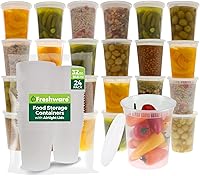
Freshware Food Storage Containers with Lids are 16 oz round polypropylene containers in a 50-set, with matching snap-on lids. Their freezer-safe, microwave-safe, and dishwasher-safe care instructions suit cooks who want many pint-sized portions in the same container style.
The 16 oz size holds 2 cups, so it works well when each meal or side fits within a pint-sized portion. The clear, stackable shape also makes it easier to identify food without opening every container.
Lift the lid before microwave heating, and let the food cool before returning a washed container to the freezer. The polypropylene material is BPA free, phthalate free, PVC free, and lead free according to the product information.
How do you pack and label frozen meals?
Pack one meal per container, wipe the rim, and label the food before freezing. Include the meal name, date frozen, and any reheating note that you may forget later.
Use freezer-safe labels or tape that can stay attached in cold conditions. Write the portion size when containers look similar, especially if you freeze sauces, soups, grains, and complete meals together.
Place containers in a single layer until the food is frozen solid when possible. Once firm, stack them according to their shape and avoid placing heavy items on lids that could flex or crack.
The best meal prep containers for the freezer can help if you want a set matched to portioning and repeated batch cooking.
What container size works for larger meals?
Choose a larger container when one portion includes several cups of food or you want leftovers for more than one serving. Leave expansion room even when the container looks large enough.
Rubbermaid Brilliance Tritan Plastic Food Storage Containers are a set of 5 rectangular 3.2-cup containers with matching lids. The BPA-free plastic containers have airtight lids, secure latches, built-in microwave vents, and freezer-safe, microwave-safe, and dishwasher-safe care instructions.
This size suits meals that do not fit comfortably in a pint-sized container. The crystal-clear Tritan material is stain resistant and odor resistant, so you can see the contents and keep different meal types organized.
The built-in vents allow microwave heating without removing the lid, but follow the venting directions and do not seal the container completely during heating. The set includes 5 containers and 5 matching lids.
How do you freeze family portions?
Use a 4.7-cup container when you need more room for a larger batch or several servings. Divide the food later if you prefer to thaw only one portion at a time.
Rubbermaid Brilliance BPA-Free Food Storage Containers are a 2-pack of medium-deep 4.7-cup rectangular containers with lids. They are BPA-free plastic containers with airtight, leak-proof seals, secure latches, stackable shapes, and freezer-safe, microwave-safe, and dishwasher-safe care instructions.
The larger capacity can suit salad, leftovers, and meals with several components. The clear construction helps you identify the contents, while the rectangular shape supports organized stacking in the freezer.
Built-in vents allow splatter-resistant microwave heating with the lid on. Open the vents as directed, and let frozen food loosen gradually rather than forcing a rigid lid or container.
How do you thaw frozen meals?
Thaw frozen meals in the refrigerator when you have time, or reheat them directly only when the container and food instructions allow it. Keep the meal covered during refrigerator thawing to reduce spills and odors.
Move the container from the freezer to the refrigerator before you need the meal. Larger portions may need more time than individual servings, so plan ahead rather than leaving food on the counter.
If you reheat from frozen, use short heating periods and stir between them when possible. The center may remain cold while the edges become hot, especially with dense meals.
For more container choices that support both steps, compare the best freezer microwave safe containers.
Can you microwave frozen meal prep containers?
Only microwave a container that is identified as microwave safe, and follow its lid instructions. Freezer-safe and microwave-safe are separate properties, so check both before heating.
Remove or loosen a sealed lid unless the container has a vent designed for microwave use. Steam needs a way to escape, and a closed container can spill or become difficult to open.
Heat food in stages rather than using one long cycle. Stir the meal when possible, check the center, and allow it to stand briefly before eating.
For glass options, see the best glass freezer containers for food. If you already prefer Pyrex, our guide to the best Pyrex food storage containers covers that category separately.
How do you prevent freezer burn?
Limit air exposure by using a well-fitting lid, leaving sensible headspace, and freezing food in the right portion size. Freezer burn affects quality, even when the food remains frozen.
Wipe the rim before closing the lid. A clean rim helps the lid seat properly and reduces the chance of drips freezing around the seal.
Keep older meals near the front and newer meals behind them. Use the date on each label so you can choose food in a sensible order rather than letting containers disappear at the back.
How do portion sizes affect freezing?
Match each container to the amount you plan to eat after thawing. Smaller portions usually thaw and reheat faster, while larger containers reduce the number of lids and labels.
The 16 oz Freshware containers suit 2-cup portions. The 3.2-cup Rubbermaid set fits meals that need more room, and the 4.7-cup Rubbermaid set is better for larger batches or multiple servings.
If you are managing servings, read how to use portion control containers before filling a full freezer. Consistent portions can make planning easier, but the container should still match the food's volume and expansion.
What is the safest way to freeze meal prep containers?
Cool food, use freezer-safe containers, leave room for expansion, label every portion, and reheat only in containers approved for microwave use. Keep lids clean, avoid forcing full containers closed, and organize meals so older portions are easy to reach.
Choose Freshware when you want many 16 oz portions. Choose the 3.2-cup Rubbermaid set for larger individual meals, or the 4.7-cup set for family portions and bigger batches.
For a broader starting point, compare the best meal prep containers and select the size, shape, and care instructions that match the meals you freeze most often.
Frequently asked questions
Can you freeze meals in meal prep containers?
Yes, you can freeze meals in meal prep containers marked freezer safe, but leave headspace for food to expand and close the lid without forcing it. Cool cooked food safely before freezing, label the container, and follow the container's microwave directions when reheating.
How much room should you leave in meal prep containers when freezing?
Leave some empty space between the food and the lid because liquids and high-moisture foods expand as they freeze. The exact amount depends on the food and container shape, so avoid filling to the rim and keep the lid flat rather than pressing it into the meal.
Can you put frozen meal prep containers in the microwave?
Only use a container identified as microwave safe, and follow its heating directions. Lift or vent the lid as required, heat in stages, and stir when possible.
A container that is freezer safe is not automatically microwave safe unless the product says both.
What is the best container size for frozen meal prep?
The best size depends on the portion and food. A 16 oz container suits a single pint-sized portion, while 3.2-cup and 4.7-cup containers give you more room for larger meals or leftovers.
Match the container to the serving so you do not leave excessive air space.