How to Choose a 24 Inch Over-the-Range Microwave
A 24 inch over-the-range microwave can work when its mounting width, cabinet opening, required clearances and vent route all match your kitchen. Measure the space and confirm installation instructions before choosing a compact model.
On this page (8 sections)
- What does 24 inch mean for an over-the-range microwave?
- How do you measure for a 24 inch microwave with hood?
- How much clearance does a 24 inch microwave over the range need?
- Which ventilation setup should you choose?
- Will a compact microwave hood clear your cabinets?
- What installation details should you confirm?
- Which products help compare your options?
- How should you make the final choice?
A 24 inch over-the-range microwave is a fit-first choice: confirm the appliance width, cabinet opening, cooktop clearance and ventilation setup before comparing cooking features. Small differences in height, depth and mounting requirements can make a compact model unsuitable for a particular kitchen.
The phrase “24 inch” commonly describes width, but the exact dimensions matter more than the label. Check the manufacturer’s installation instructions for the model you are considering, and ask a qualified installer if the opening, wiring or vent route needs changes.
For a broader checklist, start with how to choose an over-the-range microwave. This guide focuses on the extra fit questions that come with a narrow opening.
What does 24 inch mean for an over-the-range microwave?
A 24 inch microwave is generally described by its width, but width alone does not tell you whether it will fit. Measure the model’s full width, height and depth, then compare those numbers with the cabinet and wall space.
Do not assume a compact microwave has the same mounting pattern or clearances as a full-width model. The opening, nearby cabinets, trim and range dimensions all affect whether installation is possible.
If you are still sorting out size terms, what is a compact over-the-range microwave explains how compact models differ from standard-width options. For a common larger size, see what is a 30 inch over-the-range microwave.
How do you measure for a 24 inch microwave with hood?
Measure the opening and the space around it, including the distance above the cooking surface. A microwave hood has to fit the cabinets and meet the required clearance over the range.
Use this checklist before narrowing your options:
- Measure the opening’s width at the top, middle and bottom.
- Measure the available height from the cabinet underside to the cooktop clearance limit.
- Measure the usable depth from the wall to the cabinet edge, allowing for doors or trim.
- Record the distance from the cooktop to the intended bottom of the microwave.
- Check the location of the outlet, wiring, duct opening and wall studs.
- Confirm that the microwave door can open fully without hitting a wall or cabinet.
Compare your measurements with the installation diagram for the exact model, not just the product’s headline width. A listed overall width does not confirm that the mounting points, height or depth will fit your space.
Keep the manual’s clearances in view as you measure. If the range or cooktop has its own clearance requirements, use the more restrictive instructions and check local rules.
How much clearance does a 24 inch microwave over the range need?
The required clearance depends on the microwave, range or cooktop, and local installation rules. Follow the manuals for both appliances instead of relying on a general measurement from another kitchen.
The microwave must sit high enough for safe cooking and practical access, while still fitting under cabinets. A low-profile model can help where vertical space is tight, but its approved clearance still governs placement.
See what is a low-profile over-the-range microwave to understand that style.
Also consider the tallest cookware you use and whether the microwave door, controls and underside lighting remain easy to reach. If you need to change cabinetry to satisfy clearances, include that work in your installation plan before choosing the appliance.
Which ventilation setup should you choose?
Choose a venting setup that matches your kitchen’s duct route and the model’s supported modes. Over-the-range microwaves may vent outdoors or recirculate air, but not every model supports every configuration.
With external venting, the fan moves air through ductwork to an exterior outlet. Check the duct size, direction, route and wall or roof cap requirements in the installation instructions.
With recirculating ventilation, air passes through filters and returns to the kitchen. Confirm which filters are required and how they are replaced.
A charcoal filter can help reduce odors, but recirculation is not the same as exhausting cooking air outdoors.
If you are deciding between hood configurations, our guide to ductless vs convertible range hoods explains the difference. For broader fan and capture-area considerations, read how to choose a range hood.
Will a compact microwave hood clear your cabinets?
A compact microwave hood works only if its full dimensions and mounting layout fit the cabinet space. Width is just one measurement; a model may still be too tall, too deep or incompatible with the cabinet bottom.
Measure around handles, trim, backsplash lips and any cabinet overhang. Check that the door can swing open and that the underside does not block access to the rear cooking zones.
Confirm where the electrical outlet sits and whether the cord can reach it without being pinched. Check the duct opening location too, since a mismatch may require approved adapters or a different vent route.
If your kitchen is in a recreational vehicle, installation needs can differ from those in a house. Review best over-the-range microwaves for RVs for considerations around space and setup.
What installation details should you confirm?
Confirm mounting support, power, venting and the included installation method before ordering. A microwave’s physical fit does not prove that your wall, cabinet or electrical setup is ready.
The installation instructions should identify the mounting plate, fasteners, cabinet requirements and required support. Check whether the model needs a dedicated circuit or a particular outlet location, and have an electrician assess wiring if it is unclear.
The vent may need a damper, duct transition or filter setup depending on the chosen configuration. Do not cut a cabinet or wall until you have matched the opening to the exact installation diagram.
If you already have a Broan hood, replacing its fan motor is a different repair from adding a microwave. See Broan range hood motor replacement if you are evaluating that option.
Which products help compare your options?
These products illustrate two countertop alternatives and one standard-width over-the-range example. They are not all 24 inch mounting options, so use them to compare appliance type and features rather than assume they fit a narrow opening.
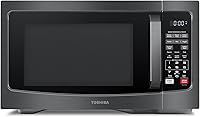
The Toshiba has a countertop installation type and measures 20.6 in wide, 14.6 in deep and 11.8 in high. Its listed features include humidity sensing, 10 power levels and a 12.4 in glass turntable.
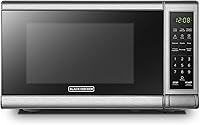
The Farberware measures 20.2 in wide, 16.54 in deep and 12.03 in high. Its features include 10 power levels, defrost by weight or time, an LED display and a child safety lock.
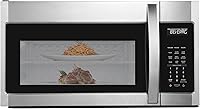
The GE is a standard-width comparison rather than a 24 inch model. For a brand-specific roundup, see Frigidaire over-the-range microwaves.
Its stated dimensions are about 29.88 in wide, 15.56 in deep and 16.13 in high, so compare its size and mounting needs with your measurements before considering it.
How should you make the final choice?
Choose a 24 inch over-the-range microwave only after its dimensions, clearance, mounting and venting requirements line up with your kitchen. Then compare white over-the-range microwave options.
If one of those checks fails, compare a different installation type or arrange the needed changes first.
Use the exact installation manual to confirm the opening and cooktop distance. Then decide whether you need an outdoor duct or a supported recirculating setup, and verify the power and mounting details.
If you have enough counter space and want to avoid an over-the-range installation, compare countertop models instead. If you want a microwave hood, pick the model whose instructions fit the kitchen as it is, or plan the cabinet and vent work before buying.
Frequently asked questions
Is a 24 inch over-the-range microwave the same as a compact microwave?
Not always. Compact describes a smaller fit or capacity compared with common models, while 24 inches usually refers to width.
Check the exact appliance dimensions and its approved mounting instructions, since two compact models can have different heights, depths and installation needs.
Can I install a 24 inch microwave over any stove?
No. The microwave must fit the cabinet space and meet the clearance requirements above your cooktop.
Check the appliance manual, the range or cooktop instructions, and the local installation requirements before deciding that a particular combination will work.
What should I measure before buying an over-the-range microwave?
Measure the cabinet opening, mounting width, depth and height, plus the distance from the cooking surface to the planned bottom of the microwave. Check the vent route, outlet location and door swing, then compare those measurements with the installation instructions for the exact model.
Does every over-the-range microwave vent outdoors?
No. Some setups exhaust outdoors through ductwork, while others recirculate air through a filter.
Confirm which venting modes the model supports and whether your cabinets and wall can accommodate the route you plan to use.