Convection Microwave vs Toaster Oven: Which to Choose? (October 2026)
Choose a convection microwave for fast reheating and microwave cooking, or a toaster oven for toast and small oven-style meals. Your best fit depends on which jobs you do most and how much counter space you can spare.
On this page (7 sections)
- Convection microwave vs toaster oven: what is the main difference?
- Which appliance reheats leftovers better?
- Which is better for baking?
- Which one saves more counter space?
- What should you check before choosing?
- How do the products in this comparison fit?
- Which should you choose: a convection microwave or toaster oven?
Choose a convection microwave for fast reheating plus baking, or a toaster oven for toast and small oven-style meals. The convection microwave vs toaster oven choice depends on which jobs you do most, the food you cook and the counter space you have.
A standard microwave heats food with microwaves, while a toaster oven uses heating elements to cook with dry heat. A convection microwave adds hot-air baking to microwave functions, so it can cover more tasks in one appliance.
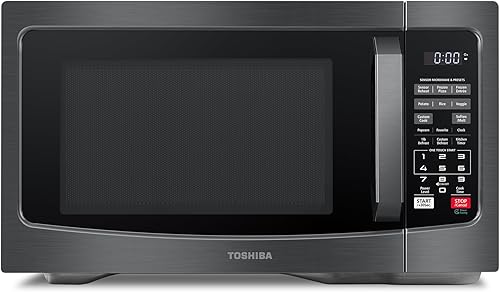
The products below illustrate the difference: the TOSHIBA and Chefman are microwave-only models, while the BLACK+DECKER and Ninja are toaster ovens. For a true combination, check that a convection microwave includes both microwave and convection modes.
 Best for compact microwave use
Chefman Countertop Microwave Oven 0.7 Cu. Ft.
Convection microwave vs toaster oven: what is the main difference?
A convection microwave combines microwave cooking with convection baking; a toaster oven cooks with dry heat. That difference shapes how quickly each reheats food and what textures it can produce.
Microwaves are useful for warming leftovers, defrosting and cooking foods with moisture. A toaster oven heats food from its elements, making it better suited to toast, broiling and small oven-style bakes.
Convection uses a fan to circulate hot air around food. Learn what convection cooking in a microwave does before choosing, because the feature is separate from ordinary microwave cooking.
The two appliances may overlap for some reheating and baking tasks, but they aren't interchangeable in every recipe. Follow the exact appliance manual for safe cookware, rack placement and cooking instructions.
Which appliance reheats leftovers better?
A microwave is usually the quicker choice for moist leftovers; a toaster oven can restore crispness to foods that benefit from dry heat. Choose based on the food rather than expecting one method to suit every plate.
Soup, rice and vegetables often reheat well in a microwave because the appliance warms food quickly. The TOSHIBA has a humidity sensor that adjusts cooking time and power, while its 10 power levels let you choose a lower setting for gentler warming.
A toaster oven takes longer, especially if you preheat it, but its dry heat can help pizza crust, bread and baked snacks regain a firmer surface. The BLACK+DECKER has bake, broil, toast and keep-warm functions, with a 10-minute preheat recommended for consistent cooking.
For a compact microwave that handles basic warming, the Chefman offers 6 presets and a +30-second control. It has 700W of microwave output and a 0.7 cu ft capacity.
Avoid assuming that every toaster oven reheats at the same speed or gives the same texture. Food thickness, starting temperature, portion size and the selected setting all affect the result.
Which is better for baking?
A toaster oven is a straightforward choice for small bakes; a convection microwave can also bake if it has a convection mode. Compare usable interior space and cooking functions before relying on either for a recipe.
The BLACK+DECKER fits a 9-inch pizza or 4 slices of bread. It has bake and broil functions, and its natural convection airflow circulates heat; preheating for 10 minutes is recommended for consistent cooking.
The larger Ninja offers bake, roast, broil and pizza modes, as well as toast and air fry settings. It fits a 12-inch pizza and has a temperature range from 85°F to 450°F.
A convection microwave may be better when you want to microwave one meal and bake another without keeping separate appliances. For a closer look at dedicated options, see our best countertop convection microwave guide.
Check the recipe's pan size against the appliance interior. A temperature setting alone doesn't guarantee that a dish will fit or cook evenly, so use the manual's rack and cookware guidance.
Does a convection microwave bake like a toaster oven?
Both can bake, but their features and cooking modes differ by model. A toaster oven relies on heating elements, while a convection microwave can use circulated hot air and may also offer microwave combination settings.
If browning or crisping is central to your recipes, look for the toaster oven's broil or toast function. If you often switch between reheating and baking, a convection microwave offers a more varied set of cooking methods in one appliance.
Don't treat a microwave-only model as a convection microwave. The TOSHIBA and Chefman in this comparison have microwave functions but no stated convection baking mode.
Which one saves more counter space?
Choose by the appliance's measured footprint and the clearance it needs, not by its name. Include room for ventilation, door movement and any flip-up or storage position.
The Chefman is 17.52 inches wide, 12.93 inches deep and 9.53 inches high. The TOSHIBA is 20.6 inches wide, 14.6 inches deep and 11.8 inches high.
The BLACK+DECKER measures 14.5 inches wide, 10.8 inches deep and 8.8 inches high. The Ninja is 15.75 inches wide, 17.01 inches deep and 7.68 inches high, and it can flip up for storage against a backsplash.
Those measurements don't include operating clearances. Check the manual for the space each model needs, then make sure the oven door can open without hitting a wall, cabinet or another appliance.
If you want to combine appliance types, compare a microwave toaster oven combo and check its exact size and modes. A combination unit still needs enough interior space for the foods you actually cook.
What should you check before choosing?
Start with your most frequent cooking task, then confirm the appliance has the right function and capacity. A long feature list matters less than a mode you'll use every week.
Choose a microwave or convection microwave if reheating, defrosting and quick microwave meals are your priority. The TOSHIBA gives you 1.2 cu ft of microwave capacity and 1000W of output, while the smaller Chefman has 0.7 cu ft and 700W.
Choose a toaster oven if you make toast, broil food or bake smaller portions. The BLACK+DECKER suits a 9-inch pizza or 4 slices of bread, while the Ninja fits a 12-inch pizza and adds air-fry, roast and dehydrate functions.
Then measure the counter, check the electrical requirements and read the manual's clearance instructions. If you are considering an over-the-range setup instead, our guide to how to choose an over-the-range microwave covers a different installation style.
Do you need a microwave and a toaster oven?
You may want both if you regularly microwave food and also toast or bake small portions. If counter space is tight, a convection microwave or combination appliance may cover more tasks in one footprint.
Keep separate appliances if you use their distinct functions often and have suitable counter space. A dedicated toaster oven gives you toast and broil modes, while a microwave remains convenient for quick reheating.
A convection model can bridge some of that gap. If you prefer a built-in appliance, compare the options in our best built-in convection microwave guide; a drawer format is another layout to consider with this convection microwave drawer guide.
How do the products in this comparison fit?
The microwave models suit reheating and microwave cooking, while the toaster ovens suit toast and small oven-style meals. These picks show the appliance types, but the TOSHIBA and Chefman are not convection microwaves.
The TOSHIBA offers a humidity sensor, 10 power levels and 1.2 cu ft capacity. The Chefman is smaller, with 0.7 cu ft, 700W output, 6 presets and a mute button.
The BLACK+DECKER toaster oven handles baking, broiling, toasting and keeping food warm. The Ninja adds air frying and several other functions, fits a larger pizza and can flip upright for storage.
Our score weighs specs and features against what you're shopping for. Compare the modes and dimensions for the exact model before choosing, since a standard microwave cannot bake with convection unless that mode is included.
For related cooking choices, compare a convection microwave vs air fryer to see how each handles crisping and everyday meals. If you want a wider set of convection microwave options, see our best convection microwave oven combo guide.
Which should you choose: a convection microwave or toaster oven?
Pick a convection microwave if you want microwave reheating and oven-style baking in one appliance; pick a toaster oven if toast, broiling and small bakes matter most. If you mainly reheat moist food, choose a microwave first, and if you need both modes, confirm the convection microwave has them.
The TOSHIBA and Chefman are microwave-only examples for reheating and cooking. The BLACK+DECKER and Ninja are toaster ovens for dry-heat cooking, with the Ninja offering more cooking modes and a flip-up storage position.
Compare the features, interior fit and required clearances before you buy. A convection microwave vs toaster oven decision is simplest when you start with your most common meal and the space available for the appliance.
Frequently asked questions
Is a convection microwave better than a toaster oven?
A convection microwave is better when you want microwave reheating plus oven-style baking in one appliance. A toaster oven is better for toast, broiling and small baked foods.
Check the exact model's functions, since a standard microwave does not have convection and a standard toaster oven cannot microwave food.
Can a toaster oven reheat leftovers?
Yes, a toaster oven can reheat leftovers, especially foods you want to warm with a dry, crisp surface. It usually takes longer than microwave reheating and may need preheating.
For soup, rice or a quick single serving, a microwave is often more convenient.
Can you bake in a convection microwave?
Yes, a convection microwave can bake when it has a convection setting and you use the right oven-safe dish. It combines microwave cooking with circulating hot air, depending on the selected mode.
Check the manual for cookware rules, rack placement and any preheating instructions.
Which appliance takes less counter space?
It depends on the models and the clearance each needs. Compare width, depth and height, then include ventilation space and room to open doors.
A toaster oven may be shorter, while a microwave can be taller or deeper; measure the usable counter before choosing.
Can one appliance replace both a microwave and toaster oven?
A convection microwave can cover microwave tasks and some baking, but it may not toast or broil the way you prefer. A microwave toaster oven combo offers both appliance types in one unit.
Check each model's listed modes and interior size against your usual meals.


