How to Choose a 1.6 Cu Ft Microwave with Sensor Cooking
Choose a 1.6 cu. ft. sensor cooking microwave by matching the capacity to your dishes, then checking sensor controls, power, turntable size and installation space. The products below are smaller countertop comparisons, so use their features to understand what to look for without treating them as 1.6 cu. ft. models.
On this page (12 sections)
- What should you look for in a 1.6 cu. ft. sensor cooking microwave?
- How does sensor cooking work?
- Is 1.6 cu. ft. the right capacity for your dishes?
- What power level should a sensor microwave have?
- Which sensor controls matter most?
- How do one-touch controls compare with sensor cooking?
- Should you choose countertop or over-the-range installation?
- How should you compare the outside dimensions?
- What dishes should you test against the interior?
- How should you use and clean a sensor microwave?
- What are the trade-offs among these three comparisons?
- How do you choose the right 1.6 cu. ft. sensor cooking microwave?
A 1.6 cu. ft. sensor cooking microwave should give you enough interior room for larger plates while using humidity-based cooking programs to reduce manual timing. Before you choose one, compare the sensor controls, output power, turntable clearance, outside dimensions and installation type.
Capacity alone doesn't tell you whether a microwave will fit your kitchen. A 1.6 cu. ft. cabinet may need more counter depth than a smaller countertop model, and the usable space can vary with the shape of the interior.
The products in this guide are smaller countertop comparisons. They show how sensor cooking, power levels, preset controls and turntable size affect daily use, but none is a 1.6 cu. ft. microwave.
What should you look for in a 1.6 cu. ft. sensor cooking microwave?
Look for a sensor program that matches the foods you reheat most, enough power for your usual portions and dimensions that fit your planned location. A useful model should also offer manual controls for meals that do not suit automatic sensing.
Check these points before you compare brands:
- Capacity: A 1.6 cu. ft. interior gives more room than the examples here, but compare the actual interior opening if you use wide bowls, square dishes or tall containers.
- Sensor menu: Confirm whether the microwave includes sensor reheat, sensor cook or humidity-based automatic adjustment.
- Power: Higher microwave output can reduce cooking time, but you still need to follow the instructions for the selected food and portion.
- Manual power settings: Multiple levels help with defrosting, softening, simmering and reheating foods that do not have a dedicated sensor program.
- Turntable size: A large cavity is less useful if the turntable cannot rotate the dish you use most.
- Outside dimensions: Measure width, depth and height, including the space needed for the door and ventilation.
- Installation type: A countertop unit needs a stable, clear surface. An over-the-range model has different ventilation and electrical requirements.
- Controls: One-touch buttons can speed up common tasks, while a full keypad gives you more control over time and power.
A sensor microwave is not automatically better for every task. Its advantage is convenience when the food, container and program allow steam or humidity to guide the cooking cycle.
For a plain explanation of the feature, read What Is Sensor Cooking on a Microwave? How It Works.
How does sensor cooking work?
Sensor cooking detects changes in humidity or steam inside the oven and uses that information to adjust the cooking cycle. The microwave estimates when the food has reached the program's target condition rather than relying only on a fixed time.
Sensor cooking works best when food releases steam in a predictable way. A loose cover may help retain moisture while allowing steam to reach the sensor, but follow the microwave's instructions for covering and venting each food type.
The process is not a guarantee that every dish will finish perfectly. Food quantity, starting temperature, container shape and arrangement all affect how quickly steam develops.
Use the correct sensor program for the food. A sensor reheat cycle may suit leftovers, while a sensor cook program may be intended for vegetables or another defined category.
Avoid opening the door during a sensor cycle unless necessary. Interrupting the process can affect the microwave's estimate and may require you to finish the food with manual time and power.
Sensor cooking also needs a fallback. Ten power levels, a kitchen timer and manual time entry let you adjust meals that are too small, too dense or otherwise unsuitable for automatic sensing.
Is 1.6 cu. ft. the right capacity for your dishes?
A 1.6 cu. ft. microwave is a good starting point if you regularly heat larger plates, casserole dishes or multiple servings. Choose a different size if your everyday dishes are small or if the larger cabinet will crowd the counter.
Capacity is an interior volume measurement, not a promise that every large dish will fit. Interior walls, the turntable, the door opening and the shape of the cavity determine what you can actually use.
Before buying, measure the widest and tallest dish you expect to heat. Include the dish's handles, lid and clearance needed for it to rotate.
A larger microwave can also mean a larger exterior. Measure the available counter or shelf, then check the full depth so the front edge does not project into a walkway.
For a smaller comparison, the BLACK+DECKER 0.7 cu. ft. model measures 17.3 in W x 13 in D x 10.2 in H and has a removable 10 in glass turntable.
Its smaller capacity suits users who mainly heat individual portions and want a modest footprint. The 700W output may require different cooking times from a higher-output 1.6 cu. ft. microwave, so use the appliance's instructions rather than copying times without adjustment.
The six buttons cover popcorn, potato, pizza, frozen vegetable, beverage and dinner plate. The model also has a clock, kitchen timer, 30 Seconds Express Cooking, a large LED display, an interior light and a push-button door release.
A child safety lock and removable glass turntable support routine household use. The stainless steel model is designed for countertop installation.
Choose this size when counter space matters more than large-dish clearance. It is not the right capacity comparison if your main goal is fitting wide casserole dishes or several servings at once.
What power level should a sensor microwave have?
Choose output power based on your portions, cooking habits and willingness to adjust times. The examples here range from 700W to 1000W, and each has 10 power settings for tasks that need more control than full power.
Higher output can heat food faster, but faster is not always better. Dense foods may need lower power and longer time so the center warms before the edges dry out.
Power levels are useful for more than defrosting. Lower settings can soften butter, warm delicate foods and reduce overheating during longer reheating cycles.
A sensor program may manage time and power automatically for supported foods. Manual settings remain important for recipes, leftovers in unusual containers and portions that fall outside the program's intended range.
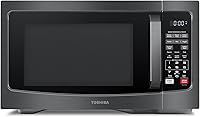
The TOSHIBA countertop model has 1000W microwave output, 10 power levels, a 1.2 cu. ft. capacity and a 12.4 in glass turntable. Its outside dimensions are 20.6 in W x 14.6 in D x 11.8 in H.
This model is the closest capacity comparison to a 1.6 cu. ft. microwave among the three products here, although it still has less interior volume. Its humidity sensor automatically adjusts cooking time and power based on food humidity for supported programs.
The control system includes six preset menus, defrost by time or weight, one-touch start from 1 to 6 minutes at full power, a clock and a kitchen timer. The product data also identifies ECO+Mute and a humidity sensor as additional features.
Its countertop installation and 20.6 in width make measurement important in a smaller kitchen or office break room. The box includes the microwave oven, glass turntable, roller ring and manual instruction.
Choose this comparison if sensor cooking and higher output matter more than matching 1.6 cu. ft. exactly. If you need room for a specific oversized dish, compare the interior opening and turntable clearance of the 1.6 cu. ft. model you are considering.
Which sensor controls matter most?
The most useful sensor controls are the ones that match your regular meals. Sensor reheat can help with leftovers, while food-specific programs can reduce manual timing for common categories.
Look for clear labels rather than a long menu that you will not use. A microwave with fewer useful programs may be easier to operate than one with many unfamiliar buttons.
Also check whether the controls let you stop, add time or adjust power. Sensor cooking is convenient, but you may need a manual correction when the food amount differs from the program's expected portion.
One-touch controls serve a different purpose. They provide quick access to common times or foods, while sensor controls respond to food conditions during the cycle.
The 0.9 cu. ft. BLACK+DECKER model has pre-programmed buttons for popcorn, potato, pizza, frozen vegetable, beverage and dinner plate.
It also has 900W output, 10 power settings, a clock, a kitchen timer and 30 seconds express cooking.
This model sits between the 0.7 cu. ft. and 1.2 cu. ft. examples in capacity. Its 18.7 in W x 13.4 in D x 10.7 in H footprint may suit a counter that cannot accommodate a deeper 1.2 cu. ft. cabinet.
The large LED digital display shows the clock, countdown timer and remaining cooking time. The interior light, push-button door release and child safety lock address everyday access and supervision.
Its stainless steel door frame contrasts with a black enclosure, while the turntable is removable for cleaning. The model is for countertop installation.
Choose it when you want more room than a compact 0.7 cu. ft. microwave without moving to the 1.2 cu. ft. comparison. It still does not provide the interior capacity of a 1.6 cu. ft. model.
For a broader comparison of this feature type, see the best countertop microwave with sensor cooking.
How do one-touch controls compare with sensor cooking?
One-touch controls start a preset time or food program, while sensor cooking adjusts the cycle based on humidity or steam. One-touch is simple and fast, but it may not respond to changes in food quantity as directly as a sensor program.
Use a one-touch setting for a familiar task when the portion and container are close to the program's intended use. Stop the cycle and check the food before serving, especially when heating a new portion size.
Sensor cooking can reduce guesswork for supported foods, but it still depends on correct setup. The food must be arranged in a way that lets the microwave sense the cooking environment.
A microwave with both options gives you flexibility. You can use sensor reheat for leftovers, a preset button for a regular beverage and manual power for delicate or unusual foods.
Read What Is a One Touch Cooking Feature on a Microwave? if you want to compare the two control styles in more detail.
Should you choose countertop or over-the-range installation?
Choose countertop installation when you want a simpler placement on a stable surface. Choose over-the-range installation only when the kitchen layout, electrical connection, ventilation and mounting requirements support it.
All three comparisons here are countertop microwaves. That means the installation decision is mostly about counter space, clearance, access and a nearby electrical outlet.
Before placing a countertop microwave, check the instructions for required ventilation space. Do not press the rear or sides tightly against cabinets if the appliance requires air clearance.
Keep the door path clear. A microwave can fit the counter but still be awkward if the open door blocks a drawer, walkway or nearby appliance.
An over-the-range microwave adds a different set of questions. You need to confirm cabinet dimensions, mounting support, cooktop clearance, electrical access and whether the vent arrangement suits your kitchen.
Do not treat a 1.6 cu. ft. capacity as proof that a microwave can be installed above a range. Capacity and installation type are separate decisions.
How should you compare the outside dimensions?
Compare outside dimensions after you decide how much interior room you need. Measure width, depth and height at the installation spot, then include door clearance and ventilation space.
The three countertop examples show why capacity and footprint do not move in a perfect line:
| Model | Capacity | Output | Outside dimensions |
|---|---|---|---|
| BLACK+DECKER B07HGH1KG6 | 0.7 cu. ft. | 700W | 17.3 in W x 13 in D x 10.2 in H |
| BLACK+DECKER B07HG9YGZY | 0.9 cu. ft. | 900W | 18.7 in W x 13.4 in D x 10.7 in H |
| TOSHIBA B076VB5JFQ | 1.2 cu. ft. | 1000W | 20.6 in W x 14.6 in D x 11.8 in H |
A 1.6 cu. ft. microwave may be wider, deeper or taller than these examples, but you cannot know the required space from capacity alone. Check the exact dimensions of the model you plan to buy.
Measure the route into the kitchen as well as the final position. Doorways, corners and cabinet openings can create problems before the microwave ever reaches the counter.
Leave enough room to read the controls and open the door fully. If the microwave sits under a cabinet, check the height and the space needed to place dishes inside.
What dishes should you test against the interior?
Test the microwave against your largest regular dish, not the smallest item you heat. A wide dinner plate, covered bowl or casserole dish gives you a more useful capacity check.
Measure the dish's diameter and height. Then consider whether the turntable can rotate it without touching the walls.
A 1.6 cu. ft. model may suit larger plates, but the turntable size still matters. A dish can fit inside the cavity and fail to rotate if its handles extend too far.
Check whether the microwave allows a rectangular dish to sit without a turntable rotation. Do not assume that a larger stated capacity means every container will work.
The comparison models use glass turntables. The 0.7 cu. ft. model has a removable 10 in turntable, the 0.9 cu. ft. model has a removable 10.6 in turntable and the TOSHIBA model has a 12.4 in glass turntable.
These details show why turntable diameter is worth checking separately from cubic feet. If you regularly use a large plate, write down its diameter before comparing models.
How should you use and clean a sensor microwave?
Use sensor programs with the food type, container and portion the instructions support. Keep the sensor area and interior clean so food residue does not interfere with normal operation.
Cover food according to the microwave's instructions. A cover can retain moisture, but a tightly sealed container can create pressure and should not be used unless it is designed for microwave heating.
Arrange food evenly when possible. Thick portions and dense centers may need standing time or a manual finish after the sensor cycle ends.
Clean spills promptly with a suitable damp cloth and mild kitchen cleaning method. Remove the glass turntable when the design allows it, then clean the cooking surface and roller area before replacing it correctly.
Do not operate the microwave empty. Avoid metal unless the instructions specifically allow a particular accessory, and use microwave-safe containers for food and liquids.
Wipe the control panel carefully rather than soaking it. Keep the door seal and latch area free of food buildup so the door can close normally.
The TOSHIBA model includes an easy-clean interior in its listed highlights. The BLACK+DECKER examples include removable glass turntables, which can make routine cleaning easier.
What are the trade-offs among these three comparisons?
The 0.7 cu. ft. BLACK+DECKER is the smallest and lowest-output option here, so it suits compact counters and individual portions.
The trade-off is less room for wide dishes than the larger models.
The 0.9 cu. ft. BLACK+DECKER adds capacity and increases output to 900W while keeping a countertop footprint under 19 in wide.
It is a middle choice for users who want more room without moving to the TOSHIBA's 1.2 cu. ft. size.
The TOSHIBA provides the largest capacity and highest output in this set, along with smart humidity sensor technology and a 12.4 in turntable. Its larger outside dimensions need more counter space.
None of these products matches the target 1.6 cu. ft. capacity. Use them to compare feature priorities, then check the exact interior and exterior measurements of any 1.6 cu. ft. microwave before ordering.
How do you choose the right 1.6 cu. ft. sensor cooking microwave?
Choose the 1.6 cu. ft. sensor cooking microwave that fits your largest regular dish, has sensor programs for your common foods and leaves safe space around the cabinet. Then confirm output power, manual controls, turntable clearance and the installation requirements.
Pick a smaller model if your meals are mostly single portions and counter space is tight. Pick a larger-capacity model if you use wide plates, covered bowls or casserole dishes often.
Choose a sensor-focused model when automatic adjustment will help with your normal reheating and cooking routine. Keep manual time and power controls high on the list because sensor programs do not suit every food.
If the TOSHIBA's 1.2 cu. ft. size is enough, its 1000W output, humidity sensor and 12.4 in turntable offer the broadest feature comparison here. If you need the extra room, use the same checklist on a true 1.6 cu. ft. model and verify its exact dimensions before choosing.
Frequently asked questions
What does sensor cooking do in a microwave?
Sensor cooking uses humidity or steam released by food to adjust cooking time, helping reduce guesswork for selected foods and reheating tasks. It does not make every dish automatic, so use the correct sensor program, container and food amount, then allow standing time when the instructions call for it.
Is 1.6 cu. ft. a large microwave?
A 1.6 cu. ft. microwave is larger than the 0.7, 0.9 and 1.2 cu. ft. countertop examples discussed here. It can give you more room for larger dishes, but outside dimensions vary, so measure the available space and check the turntable or interior opening before choosing.
How many watts should a sensor cooking microwave have?
Choose wattage based on the cooking speed and food amounts you expect to handle. The examples here range from 700W to 1000W, while a higher-output model may shorten cooking times.
Follow the microwave's instructions when converting times from a different wattage.
Does sensor cooking work with every food?
No. Sensor programs work best with the food types and amounts the microwave supports.
Steam, container shape, food density and portion size affect results, so avoid covering food in a way that blocks steam and use manual time or power settings when a sensor cycle is not suitable.
What should I measure before buying a 1.6 cu. ft. microwave?
Measure the shelf or counter width, depth and height, then leave room for the door to open and the ventilation requirements in the instructions. Also check the path from delivery to the kitchen and the size of the dishes you want to heat.